Now Reading: India and China agree on joint climate resilience pathway
-
01
India and China agree on joint climate resilience pathway

India and China agree on joint climate resilience pathway

The Story in Brief
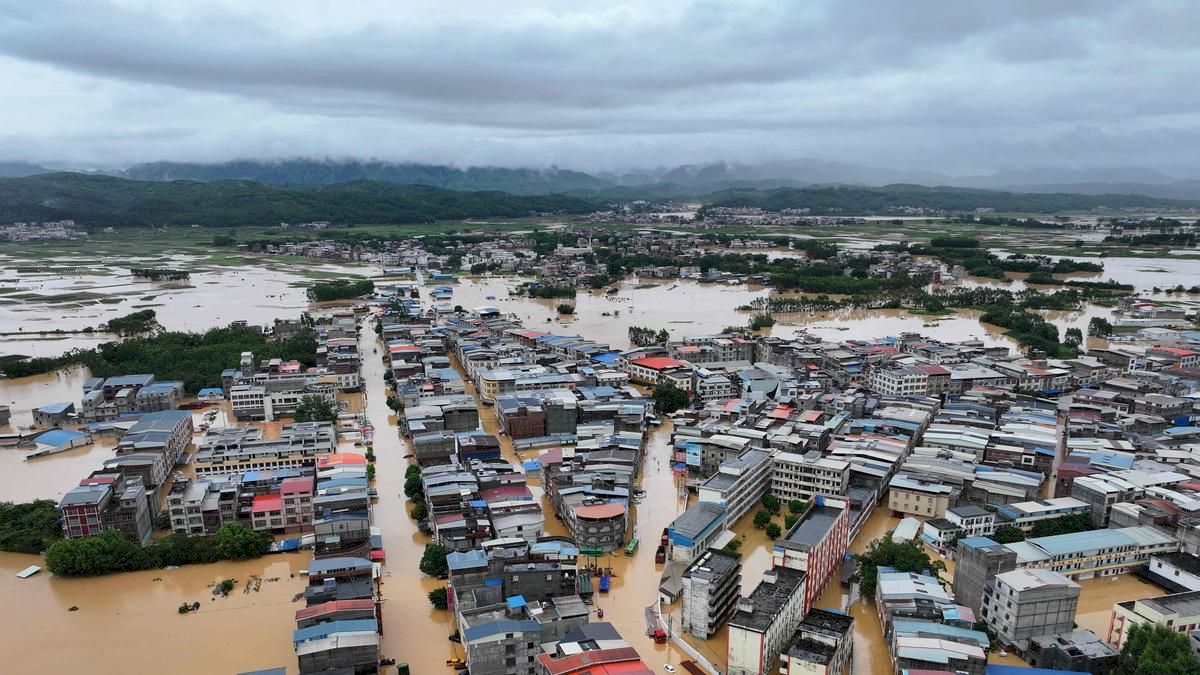
This year El Niño delayed the monsoon in India. When the rains arrived they were intense: Mumbai and Surat received a month’s rainfall in a matter of days, and regions in Assam and Odisha suffered severe flooding with loss of life and damage to infrastructure. Similar extreme weather recently affected large swathes of China, particularly Guangxi, Shaanxi and Gansu. Experts attribute these short, high‑intensity bursts to climate change, driven by higher atmospheric temperatures and rapidly warming oceans. Rapid urbanisation, loss of wetlands and inadequate drainage and waste systems have aggravated waterlogging and floods in cities, while coastal and inland centres face combined risks of extreme precipitation, storm surges, sea‑level rise, heatwaves, droughts and flash floods. The article notes past India-China MoUs and sister‑city agreements but little on‑ground action, and says disaster mitigation and urban resilience could offer a relatively low‑risk pathway for renewed engagement, though finance gaps remain a major barrier.
The Indian Opinion
The article frames climate resilience as a practical area for India-China cooperation. That is a measured position, but readers should note two caveats: past agreements often did not lead to implementation, and economic competition and geopolitical tensions constrain cooperation on technologies and minerals. Describing disaster mitigation as “low‑risk” is plausible but depends on addressing the finance and capacity gaps the article highlights. Where the piece points to successful Indian measures and China’s data‑driven planning, it indicates useful topics for mutual learning; however, whether tentative diplomatic signs will translate into funded, sustained projects remains uncertain.
Original article: A climate resilience pathway between India and China (www.thehindu.com)
This story was summarised and commented on by AI from the source linked above.
Related Posts



Stay Informed With the Latest & Most Important News
Previous Post
Next Post




Advertisement