




















Now Reading: 42 of 147 coal mines scientifically closed, but locals unaware
-
01
42 of 147 coal mines scientifically closed, but locals unaware


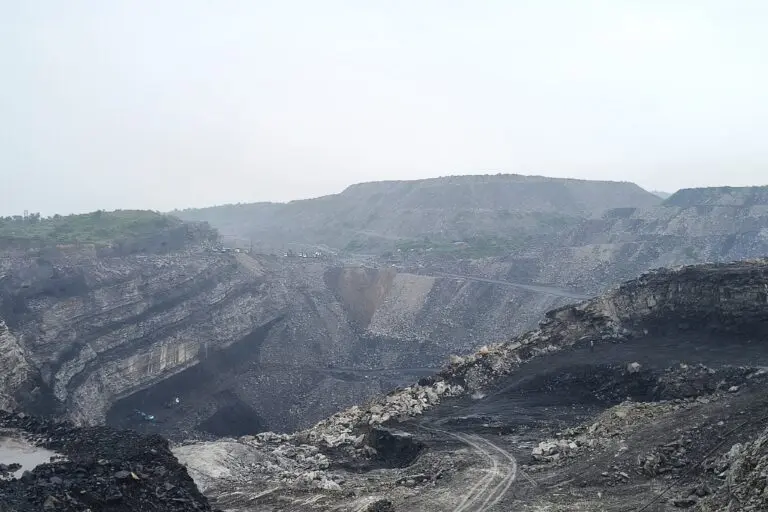
India's mine-closure framework has expanded with new guidelines focusing on scientific closure, ecological restoration, and community participation. Of 147 coal mines identified for time-bound closure, 42 had been scientifically closed by end of March, according to the Ministry of Coal's first annual report, Aaroh, released on July 22. The report documents ecological restoration and post-mining land use at these sites.
However, residents around scientifically closed mines in Bokaro, Jharkhand, report being unaware of any developments. At the New Selected (NS) Dhori Underground Mine, which was listed as scientifically closed on March 25, 2026, but stopped mining about 15 years ago, smoke was still rising from the ground in July. Santosh Nonia, a local resident, said dense smoke emerged three months earlier, causing a fire that burnt nearby trees, and was controlled after three days of continuous water pouring. Locals' suggestion to dig and fill the area with sand was not accepted, and Nonia fears the smoke may become intense again.
Sumant Singh, a CCL employee who once worked at NS Dhori, said official mining stopped 15 years ago but people still extract coal from the area. Gulab Chandra, convenor of Damodar Bachao Abhiyan, said he saw no new activity at the mines. Professor Biswajit Paul of IIT (ISM) Dhanbad noted that mine operators may lack technology to locate underground voids, as ground-penetrating radar can only detect up to 30 metres deep.
Source: india.mongabay.com
This story was synthesised by AI from the source linked above. Methodology and corrections.