











Now Reading: Chhattisgarh cabinet approves rural tap water rules, Rs 41 crore college aid
-
01
Chhattisgarh cabinet approves rural tap water rules, Rs 41 crore college aid

Chhattisgarh cabinet approves rural tap water rules, Rs 41 crore college aid

The Story in Brief
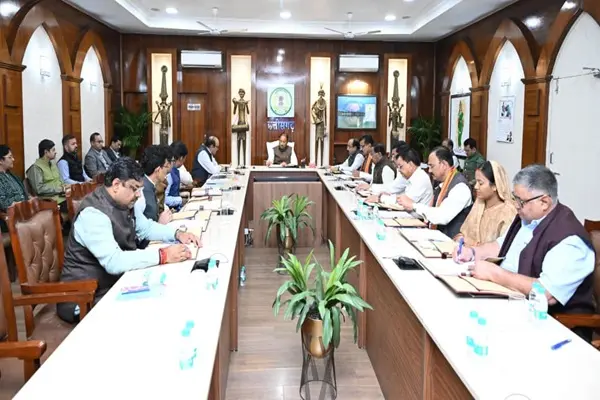
The Chhattisgarh cabinet, chaired by Chief Minister Vishnu Deo Sai, approved on Wednesday, 18 November 2026, the draft of the Chhattisgarh Panchayat (Rural Tap Water Supply Operation, Maintenance and Management) Rules, 2026, replacing the 2024 rules. Under the new framework, aligned with the Jal Jeevan Mission standards, gram panchayats with populations under 1,000 must collect at least 50% of monthly water charges to qualify for financial assistance through the Mukhyamantri Nal Jal Anudan. Panchayats collecting more than 75% of annual charges will receive an annual incentive of Rs 50,000, and those achieving 100% metering for two consecutive years will get a one-time Rs 50,000 incentive.
The cabinet also approved recurring and non-recurring grants of approximately Rs 40.98 crore over three years for Ramakrishna Mission Swami Vivekananda College in Narayanpur, benefiting students from the Abujhmadia Particularly Vulnerable Tribal Group. The college began operations in the 2026-27 academic session. Additionally, the cabinet approved the allotment of 0.223 hectares (24,090 sq ft) of land in Rajnandgaon district for a juvenile observation home and 264 sq metres within a state high school campus for a divisional office of the Chhattisgarh Board of Secondary Education.
Indian Opinion Analysis
The five outlets all cover the same cabinet decisions from Wednesday, 18 November 2026, with near-identical facts and no discernible slant. Every source leads with the new rural tap water rules, mentions the 50% collection threshold, the Rs 50,000 annual incentive for panchayats collecting over 75% of charges, and the Rs 40.98 crore grant over three years for the Narayanpur college. Times of India and Urban Acres add the one-time Rs 50,000 incentive for 100% metering for two consecutive years, which the other sources also include. Theprint.in and cgkhabar.com present the college grant as fulfilling a prior announcement by Chief Minister Vishnu Deo Sai, while News Riveting and Urban Acres frame it as expanding access to tribal students. No outlet disagrees on any figure, name or date. The coverage is uniform straight reporting across all five sources. The cabinet decisions are now notified, with implementation to follow through the new rules and the land allotments.
Coverage: 5 sources, 5 neutral
Sources (5): theprint.in (neutral report), cgkhabar.com (neutral report), newsriveting.com (neutral report), timesofindia.indiatimes.com (neutral report), urbanacres.in (neutral report)
This brief was synthesised by AI from the 5 sources linked above, so one read covers every framing they carry. Methodology and corrections.