




















Now Reading: CleanMax signs ₹50,000 crore MoU with Andhra Pradesh for green compute factory
-
01
CleanMax signs ₹50,000 crore MoU with Andhra Pradesh for green compute factory

CleanMax signs ₹50,000 crore MoU with Andhra Pradesh for green compute factory

The Story in Brief
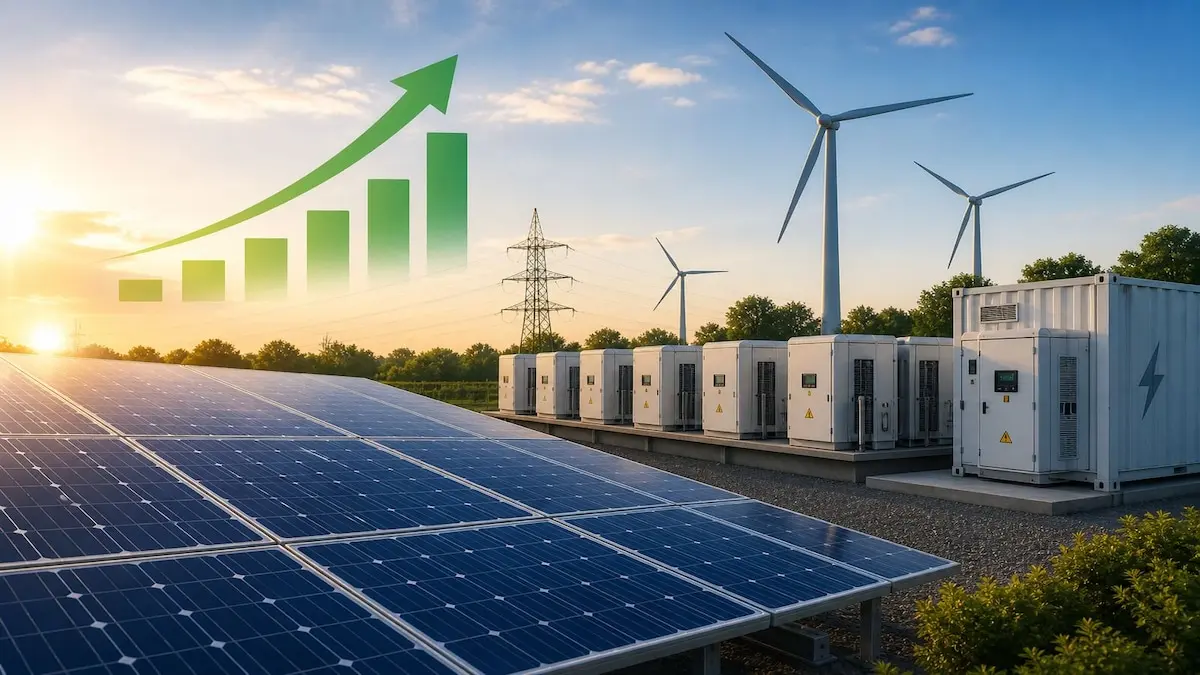
CleanMax Enviro Energy Solutions on Thursday, 12 November signed a memorandum of understanding with the Andhra Pradesh Economic Development Board to invest approximately ₹50,000 crore in an integrated clean energy complex in Kurnool district. The complex will include 3 GW of renewable capacity from wind and solar and 1 GW of pumped hydro storage, supplemented by battery energy storage systems, to power a dedicated 2 GW Green Compute Factory round the clock.
AI cloud provider Neysa, backed by Blackstone, will anchor the factory with a 1 GW IT load. The facility will use direct-to-chip cooling to minimise water consumption and draw water from industrial allocations. CleanMax will develop and operate a dedicated power distribution network through a special purpose vehicle that will apply to the Andhra Pradesh Electricity Regulatory Commission for a distribution licence. At least 1.5 GW of renewable capacity is targeted for completion by 2029. The Economic Times reported that CleanMax will also implement training programmes for local youth and upgrade educational infrastructure.
Update, 12 November 2026: All four sources confirm the ₹50,000 crore MoU announced on 12 November at the CII Partnership Summit. The Economic Times adds that CleanMax will run training programmes for local youth and upgrade educational infrastructure. Business Standard reports CleanMax’s total contracted renewable energy portfolio stands at 6.3 GW, serving 606 customers.
Indian Opinion Analysis
The four outlets report the same facts: a ₹50,000 crore MoU signed on 12 November at the CII Partnership Summit, covering 3 GW of wind and solar, 1 GW of pumped hydro storage, and a 2 GW Green Compute Factory anchored by Neysa with a 1 GW IT load in Kurnool. All name the direct-to-chip cooling, the CleanMax-operated SPV seeking an APERC distribution licence, and the 1.5 GW completion target for 2029. CNBC-TV18 and Business Standard lead on the commercial details, Neysa’s backing by Blackstone, the 6.3 GW portfolio of CleanMax, and the number of customers. The Economic Times alone adds the community component of training programmes for local youth and upgrades to educational infrastructure. The coverage is uniform straight reporting with no discernible slant: the Economic Times’s addition is purely factual, not a framing shift.
Coverage: 4 sources, 4 neutral
Sources (4): cnbctv18.com (neutral report), thehindubusinessline.com (neutral report), economictimes.indiatimes.com (neutral report), business-standard.com (neutral report)
This brief was synthesised by AI from the 4 sources linked above, so one read covers every framing they carry. Methodology and corrections.