

















Now Reading: Delhi AQI nears ‘severe’ as stubble fires spike before Diwali
-
01
Delhi AQI nears ‘severe’ as stubble fires spike before Diwali


The Story in Brief
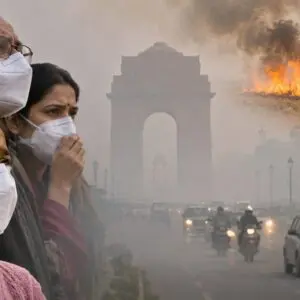
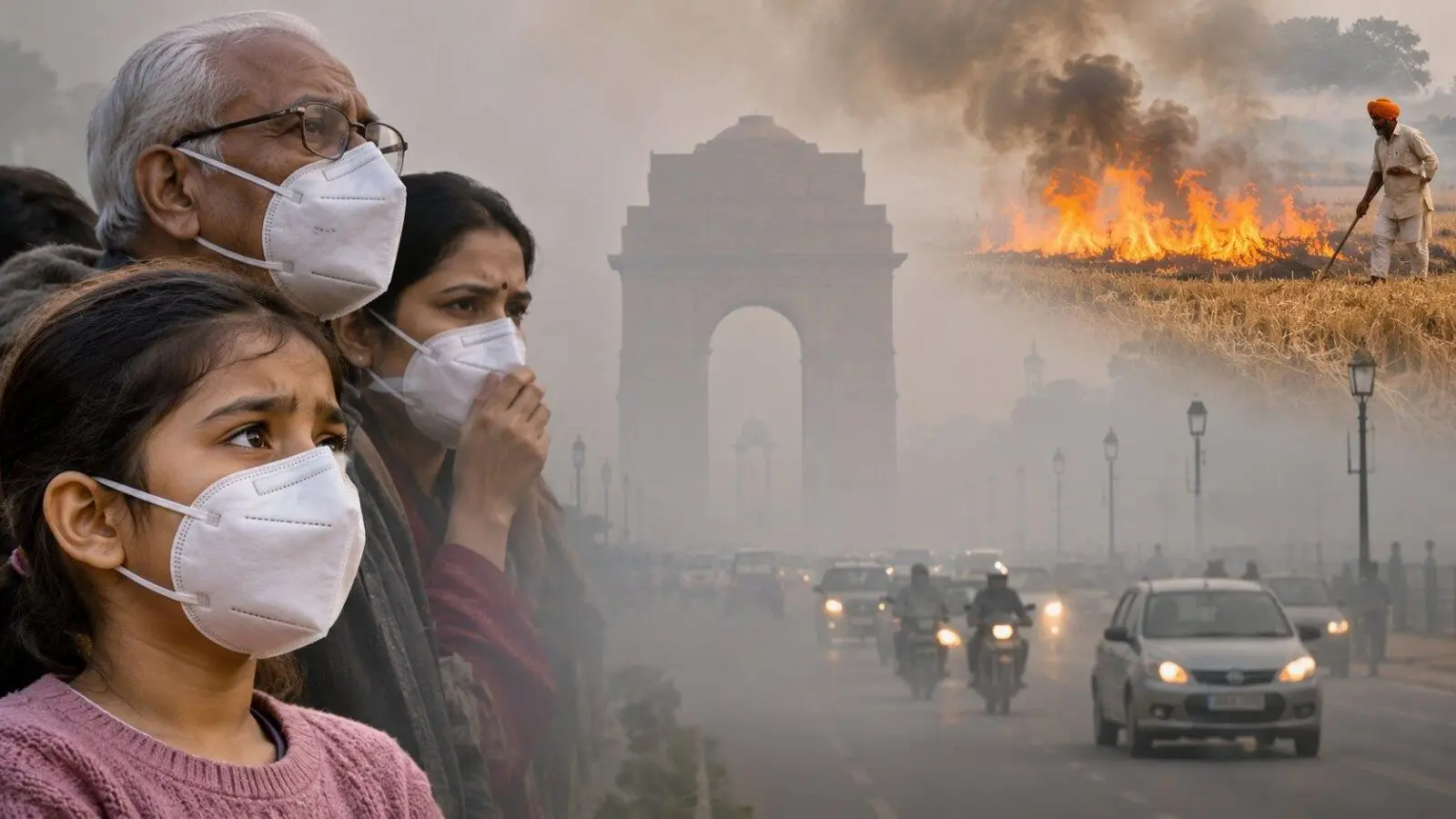
Delhi's average air quality index (AQI) stood at 367 on Thursday, 5 November, in the ‘very poor’ category, with several neighbourhoods crossing 400 into ‘severe’ territory. Jahangirpuri and IIT Delhi recorded AQI readings of 448 and 458 respectively, according to the Central Pollution Control Board (CPCB). The 24-hour average AQI rose from 350 on 3 November to 377 on 4 November, with 22 of 59 monitoring stations in the ‘severe’ zone.
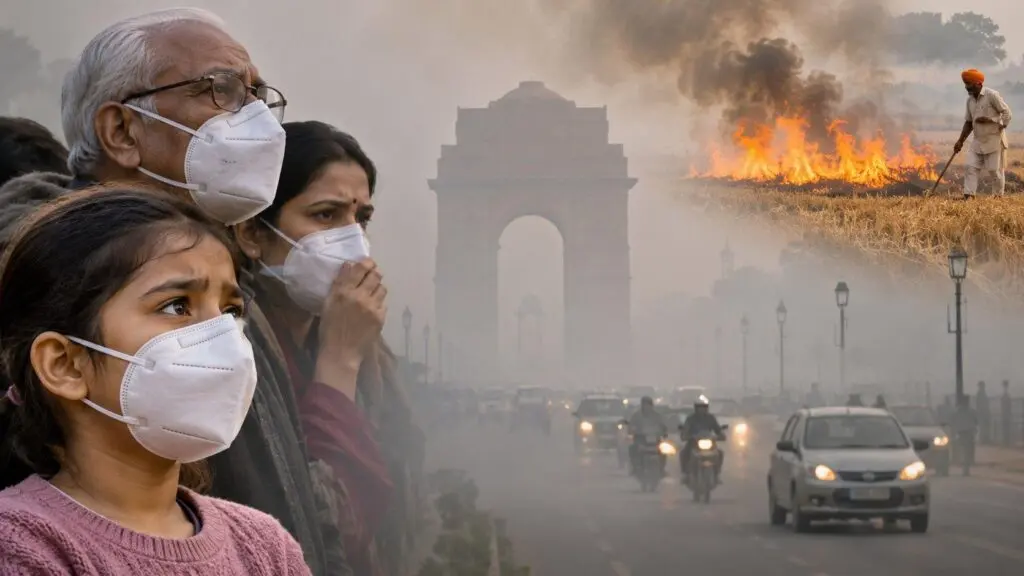
Stubble burning contributed 20.2% of Delhi's pollution on 4 November, while vehicle emissions accounted for 15.5%, as per the Decision Support System. Satellite data logged 467 farm fire events across six states that day, including 151 in Punjab and 10 in Haryana. Between 15 September and 4 November, 4,800 such incidents were recorded across seven states and union territories. The weather department has forecast clear skies and morning shallow fog for the next four days, with AQI expected to enter the ‘severe’ category on 6 and 7 November.
Indian Opinion Analysis
The data shows pollution escalating sharply just before Diwali, with the share of stubble burning in Delhi's air doubling to 20.2% in a single day. This places the burden of action squarely on Punjab and Haryana, where farm fires are concentrated. The 4,800 recorded fire events since mid-September indicate a systemic failure to enforce bans. With wind speeds likely staying low over the next four days, as the weather department forecasts clear skies and shallow fog, particulate matter will remain trapped. A spike into the 'severe' category on 6 and 7 November appears inevitable, which would trigger emergency measures under GRAP. The court and the Commission for Air Quality Management are watching the next 48 hours.
Source: businesstoday.in
This brief was synthesised by AI from the source linked above. Methodology and corrections.