













Now Reading: Delhi borders to check PUC from Nov 1 under revised GRAP
-
01
Delhi borders to check PUC from Nov 1 under revised GRAP


The Story in Brief
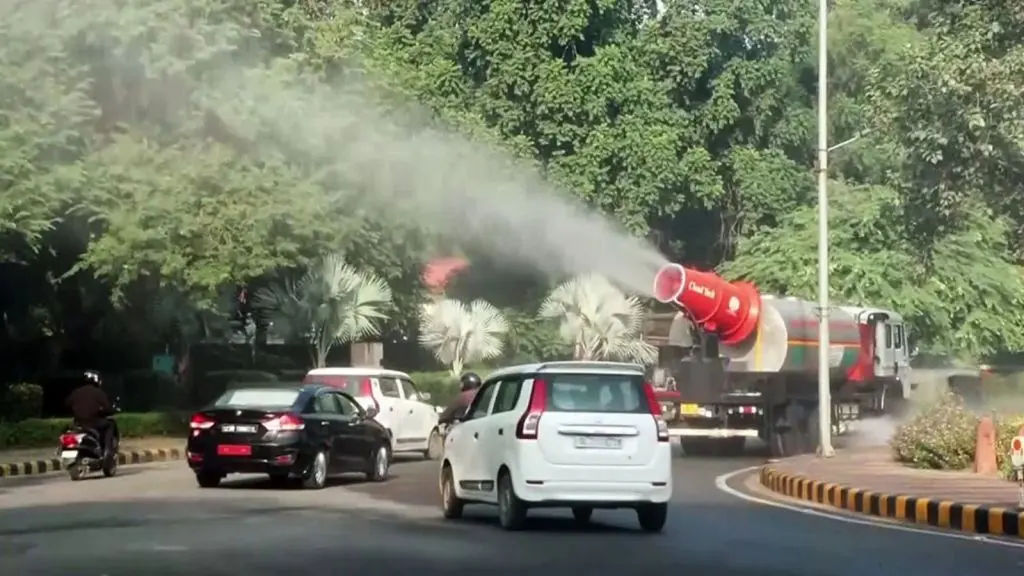
From Sunday, November 1, the Delhi Traffic Police will enforce vehicle-entry restrictions under the revised Graded Response Action Plan. All vehicles, including BS-VI compliant ones, must carry a valid Pollution Under Control (PUC) certificate, the Delhi Police said. Non-compliance can attract a fine of up to Rs 10,000, up to three months in jail, or both. Border checks will use automatic number plate recognition and RFID. The restrictions will run until at least January 31, 2027, unless exemptions are notified.
The revised GRAP rules shift from reacting to measured air quality to acting on forecasts. Stage I restrictions, including dust-mitigation and enforcement of existing pollution rules, have been in place since October 21 after Delhi's AQI jumped from 179 ('Moderate') on October 20 to 244 ('Poor') on October 21. CAQM has moved certain restrictions on older interstate buses from Stage II to Stage I, allowing earlier enforcement. Stage III curbs on BS-III petrol and BS-IV diesel light vehicles have been extended to Sonipat in Haryana.
Hindustan Times reports that the PUC test checks only carbon monoxide and hydrocarbons in petrol vehicles while the engine idles, and smoke opacity in diesel ones. A 2018 study by TERI and ARAI found that vehicles emit 81% of the nitrogen oxides produced within Delhi, gases the idle test cannot detect. That finding does not appear in the Indian Express report.
Indian Opinion Analysis
The two outlets report the same set of facts on the revised GRAP rules and the PUC enforcement, but they differ in framing. Indianexpress.com leads with the timeline and the procedural change to forecast-based restrictions, giving a bureaucratic-administrative angle that emphasises what is new and how the system works. Hindustantimes.com focuses on a single restriction, the PUC certificate, and then devotes most of its space to a technical critique of the test itself, questioning its ability to detect the pollutants that matter, such as nitrogen oxides. The critical edge in the Hindustan Times piece is not directed at the government’s policy but at the tool the policy uses. Indianexpress.com omits that technical limitation entirely.
Coverage: 2 sources, 2 neutral
Sources (2): indianexpress.com (neutral report), hindustantimes.com (neutral report)
This brief was synthesised by AI from the 2 sources linked above, so one read covers every framing they carry. Methodology and corrections.