











Now Reading: Dubai awards Rs 50 km airport people-mover deal to L&T-led consortium
-
01
Dubai awards Rs 50 km airport people-mover deal to L&T-led consortium

Dubai awards Rs 50 km airport people-mover deal to L&T-led consortium

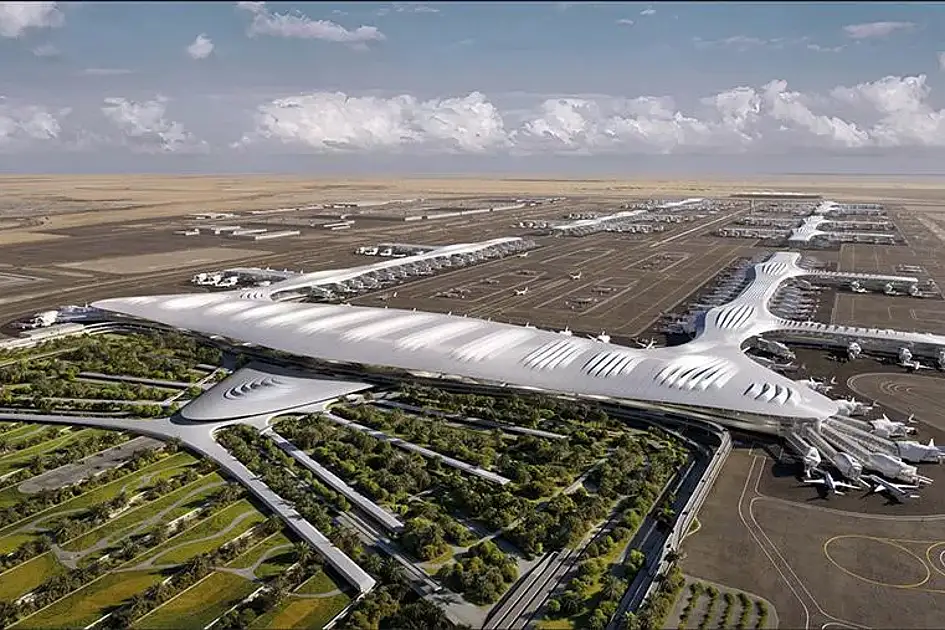
Dubai has awarded a contract for a 50 km automated people mover (APM) system at Al Maktoum International Airport, making it the world’s largest airport transit network. The contract went to a consortium of Japan’s Mitsubishi Heavy Industries, its Dubai subsidiary MHI-MESC, and Indian conglomerate Larsen & Toubro (L&T). L&T will handle on-site subsystems, while Mitsubishi manages vehicles, signalling and integration. The APM will connect nine stations across the first phase of the airport’s development.

At 50 km, the system will far exceed current record-holders: Dallas Fort Worth’s Skylink (about 8 km) and Atlanta’s Plane Train, which carries 91 million passengers a year. Completion is set for December 2031. The project is part of Dubai’s plan to turn Al Maktoum International into one of the world’s largest hub airports, targeting an opening in 2032 and a capacity of 260 million passengers annually once fully built.
Indian Opinion Analysis
Dubai is not just building an airport but a transit spine to match its ambition to become the world's busiest aviation hub. Al Maktoum’s eventual 260-million-passenger target would dwarf current leaders Atlanta (about 110 million) and Dubai International itself (around 87 million). The 50 km APM is one engineering bet: moving that many people requires moving people fast across a site roughly the size of a small city. Larsen & Toubro’s role signals that Indian engineering firms are winning major infrastructure jobs in the Gulf, not just in construction but in complex transit systems integration. The real number to watch is December 2031: if that deadline slips, the airport’s 2032 opening date could slip with it.
Source: khaleejtimes.com
This story was synthesised by AI from the source linked above. Methodology and corrections.