















Now Reading: Gold adulterated with rhenium powder passes purity tests, probe finds
-
01
Gold adulterated with rhenium powder passes purity tests, probe finds


The Story in Brief
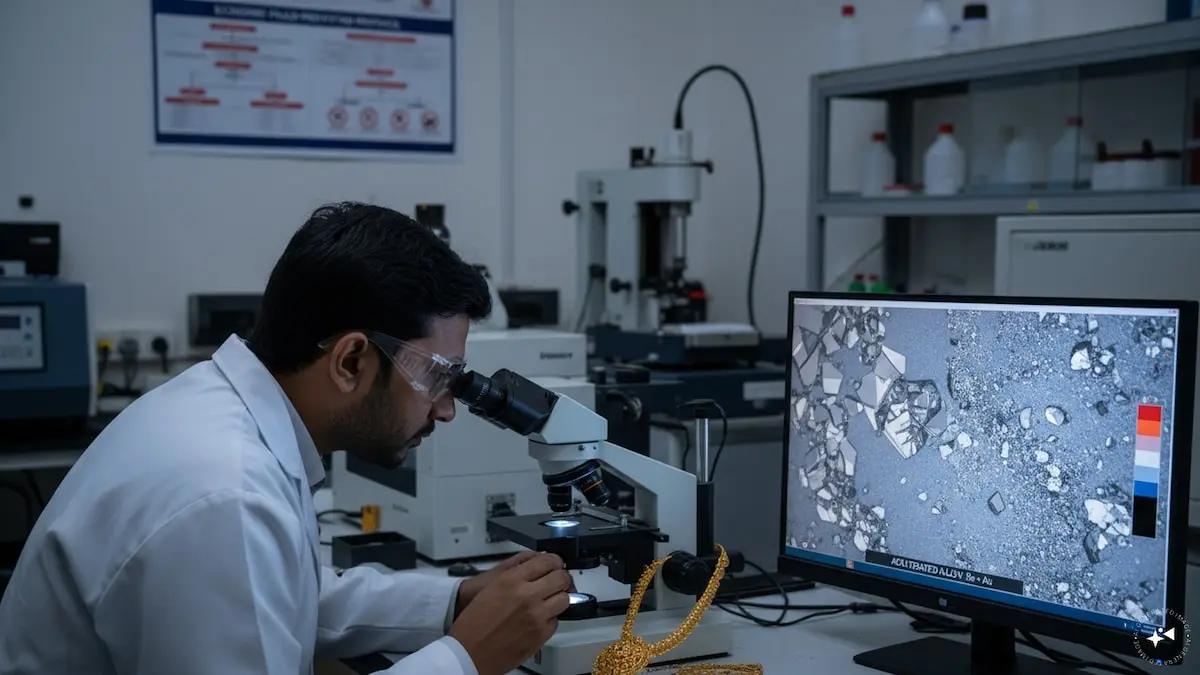
Gold jewellery mixed with rhenium powder has passed multiple purity tests and received a 22-carat hallmark, a Dainik Bhaskar investigation has found. The team added one gram of the Chinese-sourced heavy metal to 7.83 grams of 24-carat gold in Jodhpur, the finished ornament was certified as 22 carat despite containing only 81.7% actual gold, equivalent to about 20-carat purity.
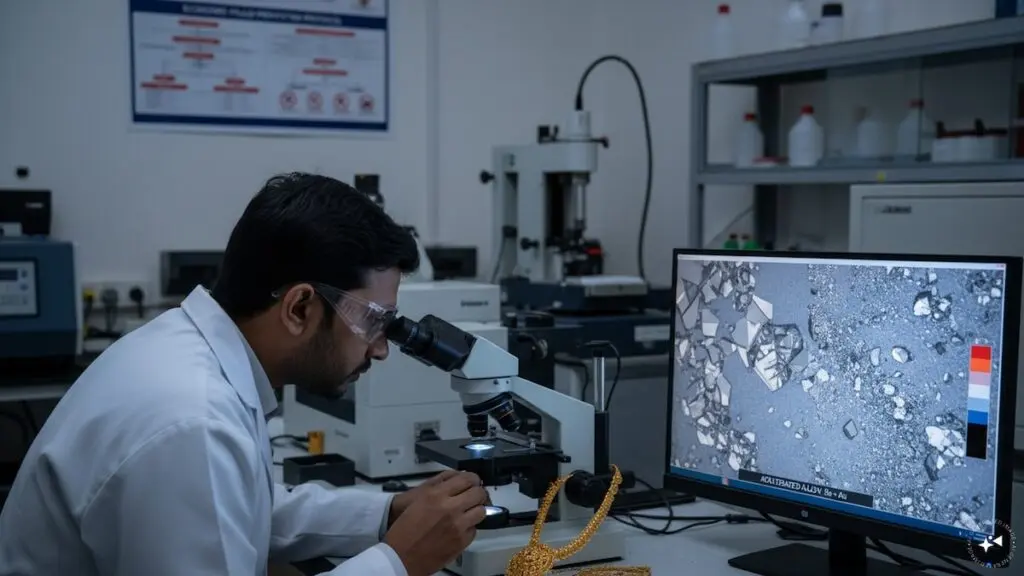
The adulterant was obtained through a Mumbai-based dealer from an agent in Shenzhen, China, who claimed the powder could be mixed in proportions of up to 25% without detection. Business Standard estimates the fraud could cost buyers Rs 14,700 per tola at current gold prices. Separately, Mint has reported jewellery traders in Indore flagging similar use of heavy metals ruthenium, iridium and osmium. The Bureau of Indian Standards fell 43.7% short of its surveillance targets for hallmarking centres in 2024-25, the Comptroller and Auditor General found.
Indian Opinion Analysis
Both CNBC-TV18 and Business Standard report the Dainik Bhaskar investigation into rhenium-adulterated gold identically on the facts: a Jodhpur experiment in which one gram of rhenium powder was mixed with 7.83 grams of 24-carat gold, and the resulting jewellery passed multiple tests and received a 22-carat hallmark. The coverage is uniform straight reporting, drawing verbatim from the same original investigation. CNBC-TV18 adds Mint's separate report on heavy metals such as ruthenium entering markets via Maharashtra and West Bengal, and a CAG audit finding that 81% of registered jewellers were not inspected in 2024-25. Business Standard, published later, includes a consumer-loss estimate of Rs 14,700 per tola at a gold price of Rs 1.5 lakh, a detail absent from CNBC-TV18. The shared story, not the secondary items, is the Jodhpur experiment.
Coverage: 2 sources, 2 neutral
Sources (2): cnbctv18.com (neutral report), business-standard.com (neutral report)
This brief was synthesised by AI from the 2 sources linked above, so one read covers every framing they carry. Methodology and corrections.