















Now Reading: RBI paper says Indian economy resilient despite global risks
-
01
RBI paper says Indian economy resilient despite global risks


The Reserve Bank of India's August 2026 State of the Economy article describes the Indian economy as resilient amid global uncertainties, supported by strong domestic demand, a recovery in manufacturing and services, improved monsoon conditions and renewed capital inflows. The Monetary Policy Committee kept the repo rate unchanged at 5.25% in August and raised the FY27 growth forecast to 6.7% from 6.6%, while lowering the inflation projection to 5% from 5.1%.

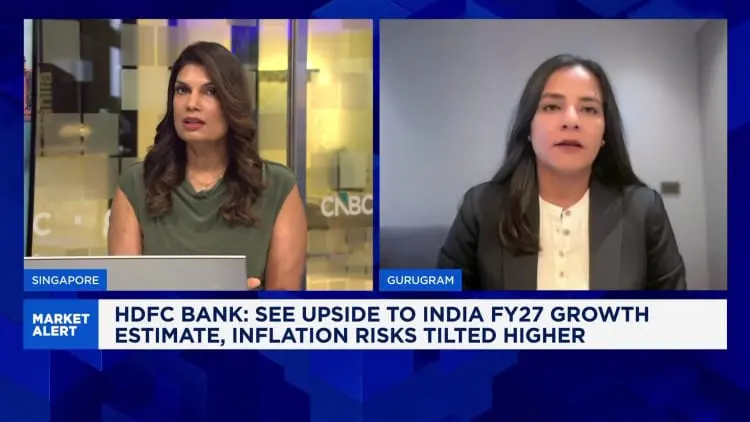
However, the RBI flagged several risks including trade uncertainty from US tariffs, geopolitical tensions, food inflation pressures, and a widening trade deficit. The Logical Indian notes that inflation rose to 4.45% in July, above the RBI's 4% target, and that deputy governor Poonam Gupta said a case for a rate hike could emerge if inflation risks intensify. HDFC Bank economist Sakshi Gupta, quoted by CNBC, pointed to a divergence between services and manufacturing activity and rising inflation risks.
The RBI bulletin also reported that foreign capital inflows rebounded in June and that India's foreign exchange reserves reached $716.9 billion by August 14. The government has announced an Open Market Sale Scheme for FY 2026-27 to augment foodgrain supply and manage food prices.
Indian Opinion Analysis
The three sources converge on the RBI's core narrative of resilience but diverge in emphasis. The RBI paper and Vajiram & Ravi foreground growth-supporting factors like domestic demand and capital inflows, while The Logical Indian leads with inflation exceeding the 4% target and deputy governor Gupta's rate-hike warning. CNBC, via HDFC Bank's Gupta, highlights the manufacturing-services divergence and cost pressures that the RBI paper downplays. The balanced reading is that the economy remains sturdy but faces real inflation and trade risks that could shift policy. The MPC's next review, likely in October 2026, will show whether the inflation projection holds or a rate hike becomes necessary.
Coverage: 3 sources, 1 pro-government, 1 government-critical, 1 neutral
Sources (3): cnbc.com (neutral report), vajiramandravi.com (pro government), thelogicalindian.com (government critical)
This brief was synthesised by AI from the 3 sources linked above, so one read covers every framing they carry. Methodology and corrections.
Updated: this story now draws on 3 sources.