











Now Reading: IIT Guwahati study finds Imphal at highest earthquake shaking risk
-
01
IIT Guwahati study finds Imphal at highest earthquake shaking risk


The Story in Brief
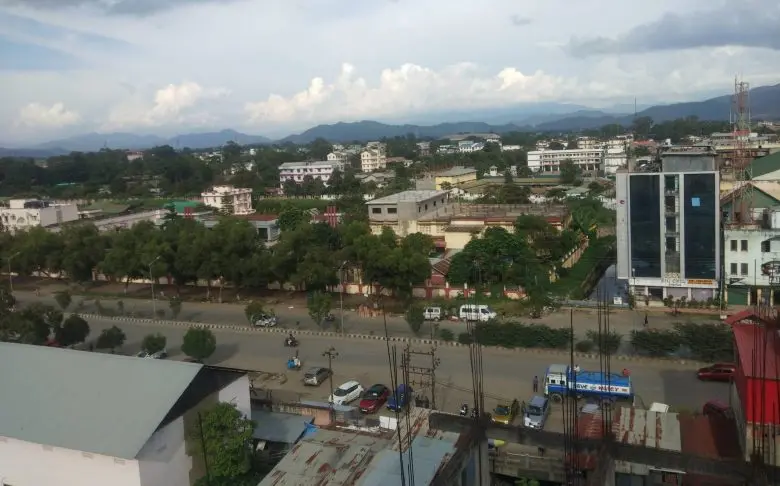
Researchers at IIT Guwahati have developed a method to assess earthquake ground-shaking severity across Northeast India, identifying Imphal as the city with the highest estimated shaking intensity among eight studied. The study, published in the Journal of Seismology, compiled nearly 6,000 earthquake records spanning 1,200 years and generated 200 synthetic catalogues to address uncertainties in historical data.
Professor Abhishek Kumar and Dr Niranjan Borah used Kernel Density Estimation and Latin Hypercube Sampling to account for regional seismic variations and fault orientation. The most intense earthquake activity was recorded in the Indo-Burma Ranges, followed by western Arunachal Pradesh, central Assam, the Shillong Plateau and southern Sikkim. The team plans to refine the framework by incorporating depth-related uncertainties and an earthquake recurrence model.
Indian Opinion Analysis
All five outlets report the IIT Guwahati study in near-identical wire-copy style, leading with the methodology and Imphal's top shaking intensity. Assamtribune, Eastmojo and Northeast Live highlight the 1,200-year catalogue and synthetic catalogues, while Times of India and Economic Times frame it as a design aid for engineers. No outlet criticises or praises the government, the coverage is uniform straight reporting on a technical academic finding. The real gap is in emphasis: Eastmojo and Economic Times name Dr Niranjan Borah as co-author, which others omit. The team plans to add depth-related uncertainties and a recurrence model next.
Coverage: 6 sources, 6 neutral
Sources (6): assamtribune.com (neutral report), ndtv.com (neutral report), eastmojo.com (neutral report), timesofindia.indiatimes.com (neutral report), economictimes.indiatimes.com (neutral report), northeastlivetv.com (neutral report)
This brief was synthesised by AI from the 6 sources linked above, so one read covers every framing they carry. Methodology and corrections.