













Now Reading: India presses for UNSC reform, equal veto for all permanent members
-
01
India presses for UNSC reform, equal veto for all permanent members

India presses for UNSC reform, equal veto for all permanent members

The Story in Brief
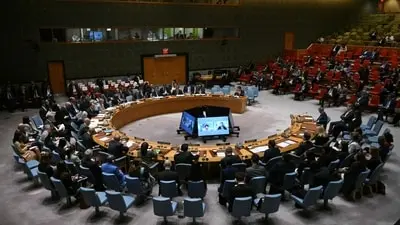
India has reiterated its call for comprehensive reforms of the United Nations Security Council, insisting that veto power must be extended to all permanent members of an expanded Council. Speaking at the General Assembly on 27 October, India's Permanent Representative Parvathaneni Harish said the veto has been exercised 331 times on roughly 200 resolutions, with most vetoes or threats coming from only three of the five permanent members. He added that the 2022 Veto Initiative mandating a General Assembly debate after each veto has failed to curb its frequent use.
Harish pressed for the early launch of text-based negotiations covering all five reform clusters, membership categories, regional representation, size and working methods, arguing that limiting the veto in isolation does not change the decision-making dynamic of the P5. He also highlighted less visible blocking mechanisms, calling the unwritten consensus rule a 'de facto veto' and naming a small group led by Italy and including Pakistan that has stalled the Intergovernmental Negotiations process through procedural manoeuvres.
Update, 27 October 2026: The Hans India adds that India decried a 'disguised, de facto veto' preventing the reform process from advancing. It reports that Harish named Uniting for Consensus, led by Italy and including Pakistan, as the group blocking text-based negotiations in the Intergovernmental Negotiations. The three earlier sources had not named the blocking group.
Indian Opinion Analysis
The four outlets cover the same Indian UN statement and largely carry identical wire copy. ANI, Deccan Chronicle and Hindustan Times all lead with India's call for comprehensive Security Council reforms and the demand that veto power should not be used for narrow political expediency, quoting Harish's figures of 331 vetoes on roughly 200 resolutions. They omit the detailed criticism of procedural blocking mechanisms that The Hans India foregrounds. The Hans India adds a distinct angle, reporting Harish's charge of a 'disguised, de facto veto' and naming Uniting for Consensus, Italy and Pakistan as the group blocking text-based negotiations, a concrete obstacle the other three do not mention. The balanced reading is that the core demand for reforms and veto restraint is uniform across sources, but The Hans India's account reveals the specific diplomatic impasse countries such as India attribute to Italy-led procedural manoeuvres.
Coverage: 3 sources, 3 neutral
Sources (3): ANI (carried by aninews.in, deccanchronicle.com), hindustantimes.com (neutral report), thehansindia.com (neutral report)
This brief was synthesised by AI from the 3 sources linked above, so one read covers every framing they carry. Methodology and corrections.