








Now Reading: Jaishankar flags weaponisation of global economy at Raisina Tokyo
-
01
Jaishankar flags weaponisation of global economy at Raisina Tokyo

Jaishankar flags weaponisation of global economy at Raisina Tokyo

The Story in Brief
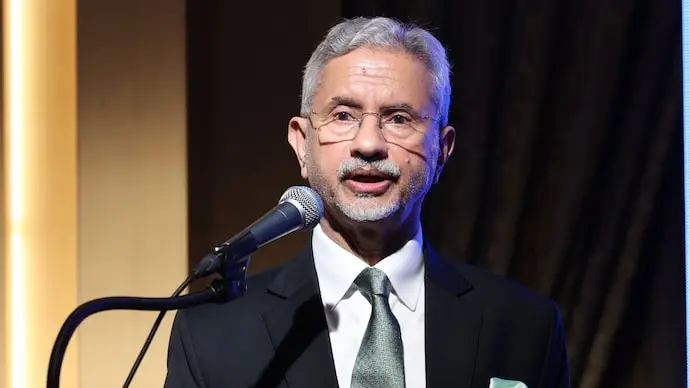
External affairs minister S Jaishankar on Wednesday, 18 November, said the global economy is increasingly being weaponised, with countries using access to energy, technology, finance and trade as tools of geopolitical pressure. Speaking at the inaugural Raisina Tokyo 2026 in Japan, he identified five defining features reshaping the international order: repeated shocks, weaponisation of resources, extreme competition, de-risking and diversification, and trusted partnerships.
Jaishankar said decades of steady globalisation had been disrupted by crises including the Covid-19 pandemic, major conflicts, trade disruptions and economic volatility. He warned that physical and virtual chokepoints were becoming instruments of strategic competition and that established rules were weakening. He called for stronger India-Japan ties, saying the changing environment offered a compelling reason to expand cooperation in areas including semiconductors, critical minerals and clean energy.
Jaishankar is in Japan for the fourth India-Japan 2+2 dialogue, which he will co-chair on Thursday, 19 November, with defence minister Rajnath Singh and Japanese foreign minister Toshimitsu Motegi and defence minister Shinjiro Koizumi.
Update, 18 November 2026: Open magazine's report on 18 November adds that Jaishankar called for a more contemporary assessment of India, reflecting its economic transformation and technological capabilities. It also confirms the five trends and the emphasis on India-Japan cooperation in semiconductors, critical minerals and clean energy, with no new figures or dates beyond the 2+2 dialogue on Thursday, 19 November.
Indian Opinion Analysis
Coverage of Jaishankar's Raisina Tokyo speech is uniform across the four outlets, all carrying the same five-point framework and the same call for stronger India-Japan ties in straight news style. Times of India leads with the warning that the global economy is being weaponised, India Today frames the shift as a move away from globalisation and efficiency toward strategic interests, while Economic Times and Open stress the bilateral implications and the coming 2+2 dialogue. Each outlet reproduces the minister's own characterisation of the trends as defining features, and none adds independent commentary or dissenting views. The speech itself is the only source of facts, so the differences are largely presentational. The concrete next step, the 2+2 dialogue to be co-chaired by Jaishankar and Rajnath Singh in Tokyo on 19 November, is named by Economic Times and confirmed by the previous brief.
Coverage: 4 sources, 4 neutral
Sources (4): timesofindia.indiatimes.com (neutral report), economictimes.indiatimes.com (neutral report), indiatoday.in (neutral report), openthemagazine.com (neutral report)
This brief was synthesised by AI from the 4 sources linked above, so one read covers every framing they carry. Methodology and corrections.