














Now Reading: Karnataka urges Japanese firms to scale manufacturing, tech ties
-
01
Karnataka urges Japanese firms to scale manufacturing, tech ties


The Story in Brief
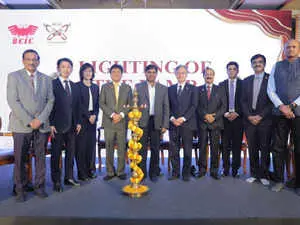
Karnataka has invited Japanese companies to expand manufacturing and technology partnerships, promising talent, land and support. Principal Secretary S Selvakumar made the appeal at the fourth India-Japan Business Summit in Bengaluru on Monday, 2 November, saying, ‘Bring your technology and we will provide the talent, the land, and the partnership to build it at scale.’ The state accounts for 40% of India's electronic design activity, 65% of aerospace and defence manufacturing, 40% of software exports and 52% of machine-tool production.
Incentive packages for electronics manufacturing include support for plant, machinery and land, turnover-linked incentives and power tariff subsidies. A digital single-window system covers over 30 departments. Over 200 Japanese companies and 500 establishments operate in Karnataka, said Consul General Hiroshi Nawata. BCIC president K Ravi said the chamber's Tokyo office aims to connect over 1,000 Indian MSMEs with Japanese firms. BCIC also signed pacts with three colleges for Japanese language training. Eight companies from Tokushima Prefecture are in Bengaluru seeking opportunities.
Indian Opinion Analysis
All three outlets reported the same event with virtually identical substance, each presenting the state government's invitation and its economic statistics without critical scrutiny. The Economic Times and The Hindu led with the investment pitch and detailed incentive packages, while The Times of India opened with the direct appeal and added the Tokushima delegation's presence. None questioned figures such as the 40% software export share or the 65% aerospace and defence manufacturing share, nor did they probe the timeline or conditions attached to the incentives. This is uniform straight reporting of a government-led promotional summit, with the only difference being the emphasis on the commercial opportunity versus the formal invitation. The summit's outcome, such as whether the eight Tokushima companies sign any agreements, remains the next concrete point to watch.
Coverage: 3 sources, 3 neutral
Sources (3): economictimes.indiatimes.com (neutral report), timesofindia.indiatimes.com (neutral report), thehindu.com (neutral report)
This brief was synthesised by AI from the 3 sources linked above, so one read covers every framing they carry. Methodology and corrections.