




















Now Reading: Lead exposure worsens Alzheimer’s cell damage: ICMR-NIN study
-
01
Lead exposure worsens Alzheimer’s cell damage: ICMR-NIN study


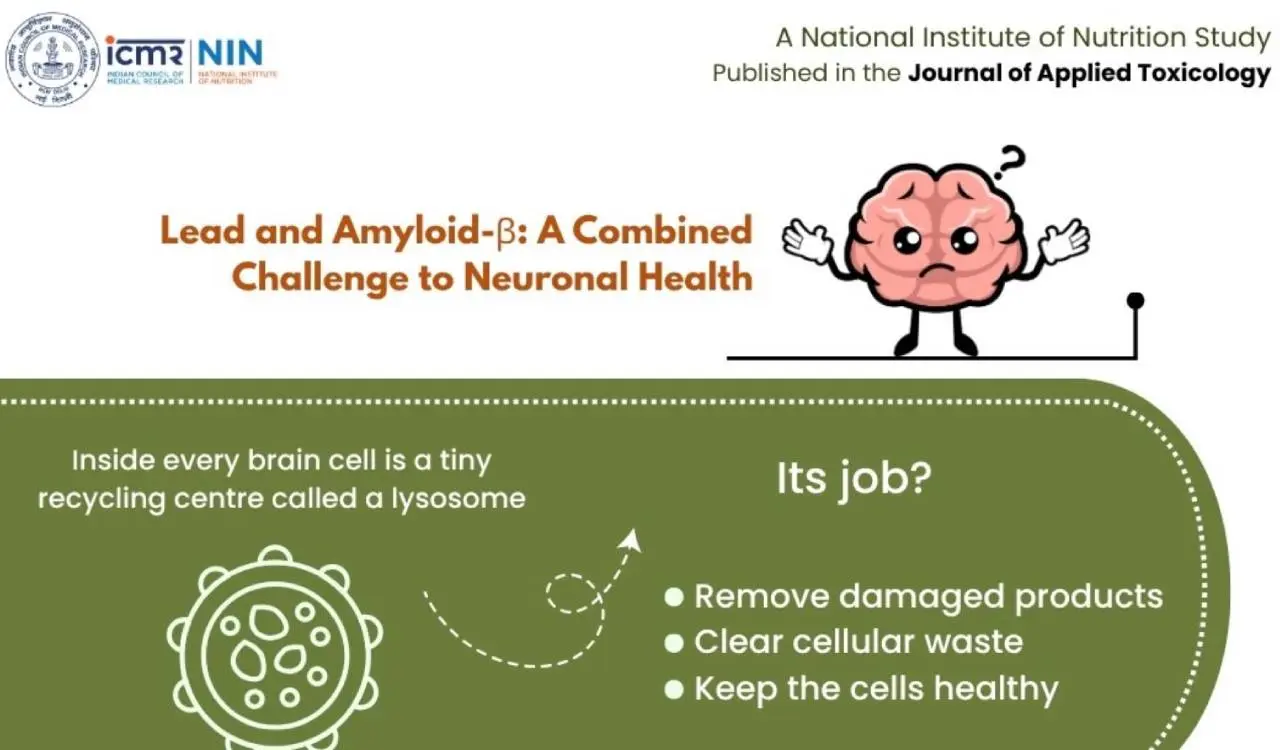
ICMR-National Institute of Nutrition (ICMR-NIN) researchers have found that combined exposure to environmental lead and amyloid-beta peptides causes significantly greater damage to nerve cells than either factor alone. The study, published in the Journal of Applied Toxicology, tested lead and two forms of amyloid-beta on human neuronal cells in the lab.
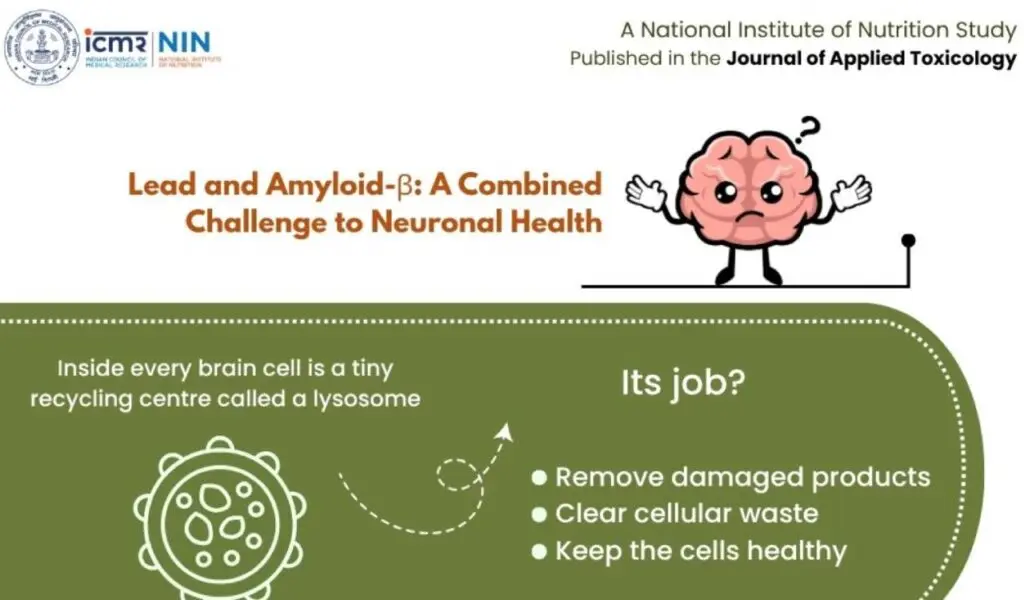
The study found that combined exposure reduced cell survival, disrupted lysosomal waste-clearing systems and damaged cell structures. Dr Suresh Challa, who led the research, said the findings show lead can worsen lysosomal dysfunction in the presence of amyloid-beta. Director Dr Bharati Kulkarni said the study highlights the interaction between environmental pollutants and biological factors in brain health.
The findings provide a cellular mechanism for how environmental factors may contribute to neurodegenerative disorders. Further research will determine how this lab finding translates to human populations.
Indian Opinion Analysis
Both sources report the same ICMR-NIN study with nearly identical facts. Telangana Today leads in its headline with the Alzheimer's disease link, framing the finding as a direct pathology link first. Times of India opens with nerve cell damage, focusing on the cellular mechanism. Both sources present the study neutrally, attributing quotes to the same scientists. Telangana Today includes the publication date and explicitly names the journal in the body, while Times of India does not. The middle-ground takeaway is that this lab-based cellular study is a mechanistic insight, not a clinical trial, it shows a plausible biological pathway but does not prove that environmental lead exposure causes Alzheimer's disease in humans. The next step to watch is whether this preliminary cellular finding spurs further epidemiological studies in Indian populations at risk.
Coverage: 2 sources, 2 neutral
Sources (2): telanganatoday.com (neutral report), timesofindia.indiatimes.com (neutral report)
This story was synthesised by AI from the 2 sources linked above. Methodology and corrections.
Updated: this story now draws on 2 sources.