





















Now Reading: Man surrenders after hacking wife to death near Vellore
-
01
Man surrenders after hacking wife to death near Vellore


The Story in Brief
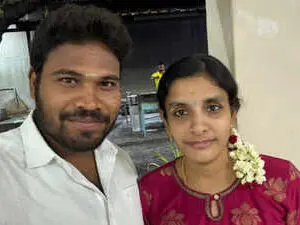
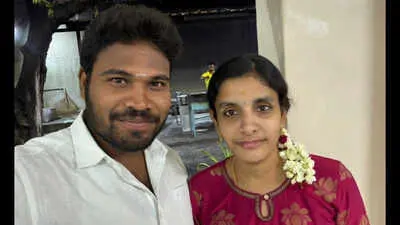
A car driver, Hari Prasad, hacked his wife H Keerthiga, 30, to death at his mother-in-law's workplace in Sathuvachari, Vellore district, on Wednesday, 25 November 2026. The couple had married for love and had two sons. Domestic disputes had brewed in recent days, and three days earlier Prasad had allegedly assaulted Keerthiga, prompting her to move to her mother Vijaya's house.
Fearing for her daughter's safety, Vijaya took Keerthiga to her workplace at a matrimony office. Prasad called to learn her location, arrived with a machete, and attacked her. Keerthiga died on the spot from severe injuries, Vijaya sustained a hand injury when she intervened. Prasad surrendered at Sathuvachari police station with the weapon. Police recovered the body for postmortem and registered a case.
Indian Opinion Analysis
Times of India's detailed account of the Vellore case, including the accused's surrender with the weapon and the motive of prior assault, reads as a neutral crime report with no discernible slant. The Hindu's brief item on a separate Theni district murder, with the attacker still at large, is likewise straight reportage. The two outlets cover unrelated incidents, so there is no framing conflict to compare. Both articles are uniform, fact-driven police reports that offer neither a pro-government nor a critical editorial stance. The common implication is that domestic homicides follow a recurring pattern of prior altercations and the accused either surrendering or fleeing, leaving police to complete investigations in each jurisdiction.
Coverage: 2 sources, 2 neutral
Sources (2): timesofindia.indiatimes.com (neutral report), thehindu.com (neutral report)
This brief was synthesised by AI from the 2 sources linked above, so one read covers every framing they carry. Methodology and corrections.