











Now Reading: NHAI mandates emergency services on highways before opening to traffic
-
01
NHAI mandates emergency services on highways before opening to traffic


The Story in Brief
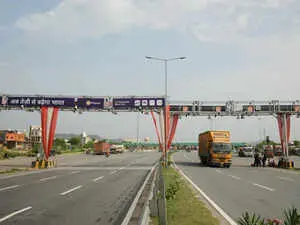
The National Highways Authority of India has issued guidelines requiring Incident Management Services, ambulances, route patrolling vehicles and tow-away cranes, to be available on any National Highway stretch before it is opened to traffic. The move, announced on Wednesday (25 November 2026), aims to strengthen road safety and ensure timely assistance during accidents and breakdowns. On operational stretches, ambulances will be stationed at user fee plazas or other locations based on accident data.
For highways entrusted to NHAI by the Ministry of Road Transport and Highways, ambulances will be deployed through a centralised agency, while route patrolling vehicles and tow-away cranes will be arranged through separate tenders. For stretches not entrusted to NHAI but tolled by it, IMS deployment will follow the ministry's procedure, with ambulances coordinated through NHAI's centralised agency. In both cases, on-location teams will be integrated with NHAI's 1033 helpline and coordinate with local police, fire services and hospitals.
Indian Opinion Analysis
Both yespunjab.com and morungexpress.com reported the NHAI's new guidelines with near-identical language drawn from the same official statement. Each led with the core fact, that IMS must be in place before highway stretches open to traffic, and both reproduced the same rollout details for operational stretches, entrusted stretches and non-entrusted tolled stretches. Neither outlet introduced independent analysis, criticism, or government advocacy, the coverage is uniform straight reporting. The practical question the guidelines leave open is implementation speed: NHAI has prescribed the framework but not a deadline for deploying ambulances, route patrolling vehicles and tow-away cranes on each category of highway.
Coverage: 2 sources, 2 neutral
Sources (2): yespunjab.com (neutral report), morungexpress.com (neutral report)
This brief was synthesised by AI from the 2 sources linked above, so one read covers every framing they carry. Methodology and corrections.