


















Now Reading: 42.6% use two-wheelers, workers spend Rs 785 monthly: NSO survey
-
01
42.6% use two-wheelers, workers spend Rs 785 monthly: NSO survey


The Story in Brief
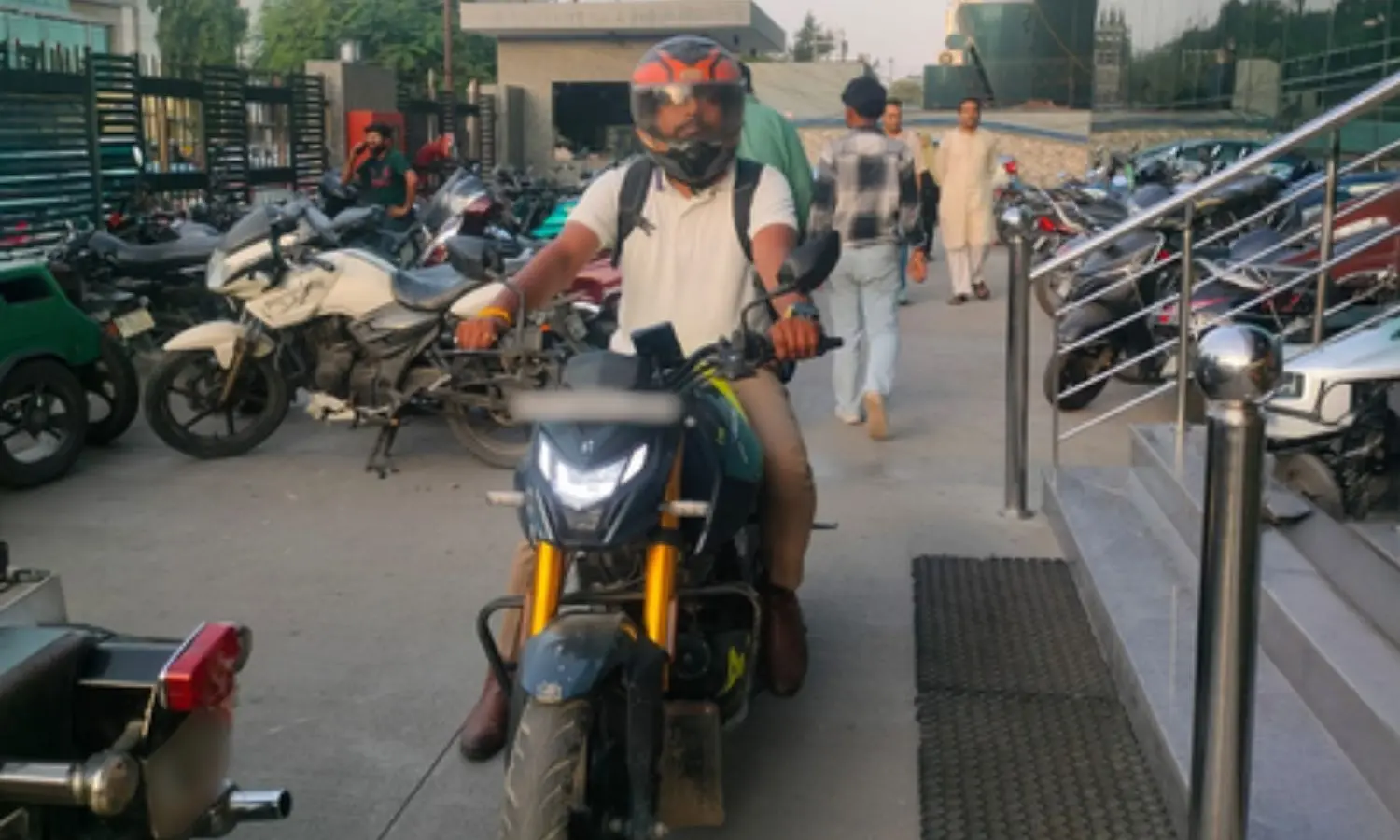
Two-wheelers are the most common mode for workers commuting to fixed workplaces in India, accounting for 42.6% of such trips, according to the first National Household Travel Survey by the National Statistics Office (NSO). The average monthly expenditure on commuting to a fixed workplace is Rs 785 per worker, with urban workers spending Rs 1,044 compared to Rs 612 for rural workers. Around 83.4% of workers reach their workplaces in under 30 minutes, while 87.6% of students reach educational institutions within the same time.
The survey, conducted between July 2025 and June 2026 covering 4.92 lakh households, revealed a significant gender gap: 61.9% of male workers undertake daily work trips of more than 1 km, compared with 41.9% of female workers. Rural women spend Rs 307 a month on commuting, less than half the Rs 674 men spend. For overnight household journeys, buses accounted for 55.8% of trips and inter-city railways for 17.7%. The NSO said the data will help identify gaps in transport systems and optimise routes.
Update, 8 October 2026: The Hindu reported that women are twice as likely as men to use public transport or walk to work, with 67% of women relying on these modes against 33% of men. Livemint added that safety concerns shape women’s commuting patterns, with most urban women concluding work before 6 pm. Both outlets confirmed the core findings on two-wheeler dominance and the Rs 785 average monthly spend.
Indian Opinion Analysis
Nearly every outlet led with the top-line figures from the NSO survey, producing uniform straight reporting. The Hindu and Livemint added a distinct gender-angle lens, foregrounding that women walk or take buses while men dominate two-wheelers, and linking the data to state free-bus schemes. The Indian Express explicitly connected the survey's bus-usage figures to a policy justification for those schemes, naming Tamil Nadu's recent expansion. Times of India produced multiple articles, one highlighting the low 15% public-transport share and another the gender spend gap. Business Standard focused sharply on the gender gap in commuting distance and expenditure. No outlet challenged the government's framing of the data, the variation is one of emphasis, not stance. The survey itself, as reported across sources, reveals that 83.4% of workers reach their workplace in under 30 minutes, suggesting that for most Indians daily mobility is functional and local, even if dominated by private two-wheelers.
Coverage: 18 sources, 18 neutral
Sources (18): thehansindia.com (neutral report), yespunjab.com (neutral report), business-standard.com (neutral report), livemint.com (neutral report), sambadenglish.com (neutral report), thehindubusinessline.com (neutral report), timesofindia.indiatimes.com (neutral report), economictimes.indiatimes.com (neutral report), timesofindia.indiatimes.com (2) (neutral report), timesofindia.indiatimes.com (3) (neutral report), indianexpress.com (neutral report), economictimes.indiatimes.com (2) (neutral report), news9live.com (neutral report), mathrubhumi.com (neutral report), ndtv.com (neutral report), thehindu.com (neutral report), thehindu.com (2) (neutral report), livemint.com (2) (neutral report)
This brief was synthesised by AI from the 18 sources linked above, so one read covers every framing they carry. Methodology and corrections.