








Now Reading: Panjab University scientists patent quantum dot tech for water bacteria detection
-
01
Panjab University scientists patent quantum dot tech for water bacteria detection

Panjab University scientists patent quantum dot tech for water bacteria detection

The Story in Brief
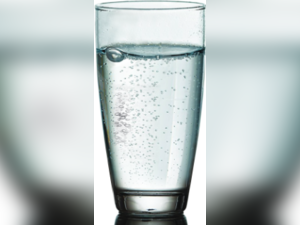
Scientists at Panjab University’s University Institute of Pharmaceutical Sciences (UIPS) have secured an Indian patent for a quantum dot-based technology that detects disease-causing bacteria in drinking water through fluorescent signals. The patent, numbered 610483, was filed on 14 February 2019 and granted on 20 November 2026.
The technology uses a functionalised glass surface to capture pathogens while fluorescent quantum dots indicate their presence. Demonstrated against Escherichia coli (E. coli), which cannot be identified through sight, smell or taste, the method could form the basis of a portable water-testing kit for quicker microbial screening. Researchers said the platform could also be adapted to detect other pathogens by using specific recognition molecules. The team was led by Dr Gurpal Singh and Prof Bhupinder Singh Bhoop, along with Taranvir Kaur, Dr Anjali Pant and Dr Ashish Suttee. Commercial deployment would depend on further development of the platform.
Indian Opinion Analysis
Both outlets report the same patent grant and technology in nearly identical language, making this a case of uniform straight reporting. Neither article adds a critical or political dimension. The coverage focuses on the scientific method, glass surfaces functionalised to capture bacteria and quantum dots that signal their presence, and the potential for a portable testing kit. Both note the technology has been demonstrated only for E. coli so far and that practical deployment would require further development. The measured implication, from the sources’ own words, is that the innovation is patented but not yet a commercial product.
Coverage: 2 sources, 2 neutral
Sources (2): tribuneindia.com (neutral report), timesofindia.indiatimes.com (neutral report)
This brief was synthesised by AI from the 2 sources linked above, so one read covers every framing they carry. Methodology and corrections.