



















Now Reading: Sandhu Says Strategic Autonomy Helps India Balance Major Powers
-
01
Sandhu Says Strategic Autonomy Helps India Balance Major Powers


The Story in Brief
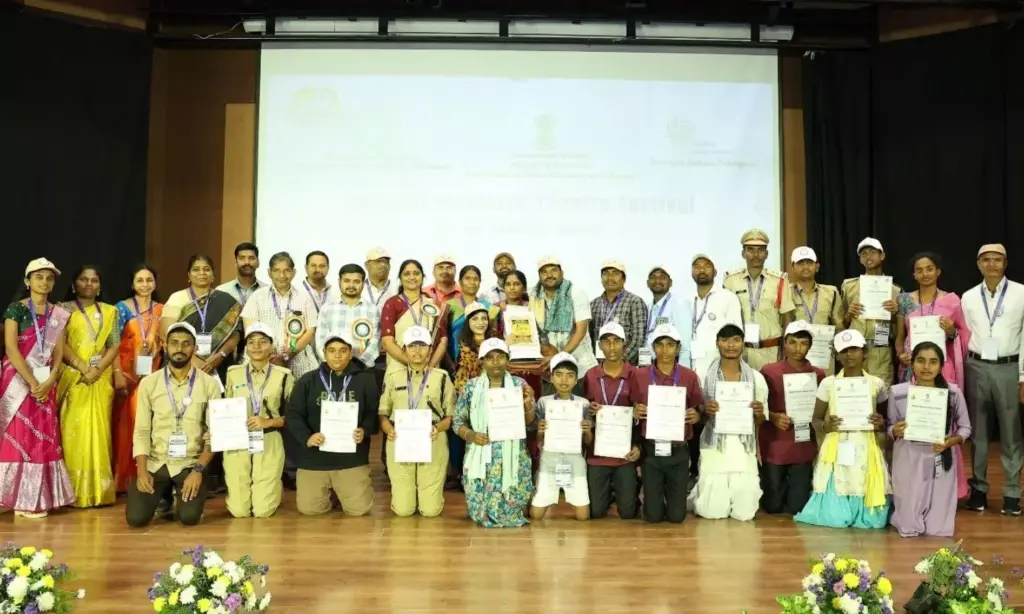
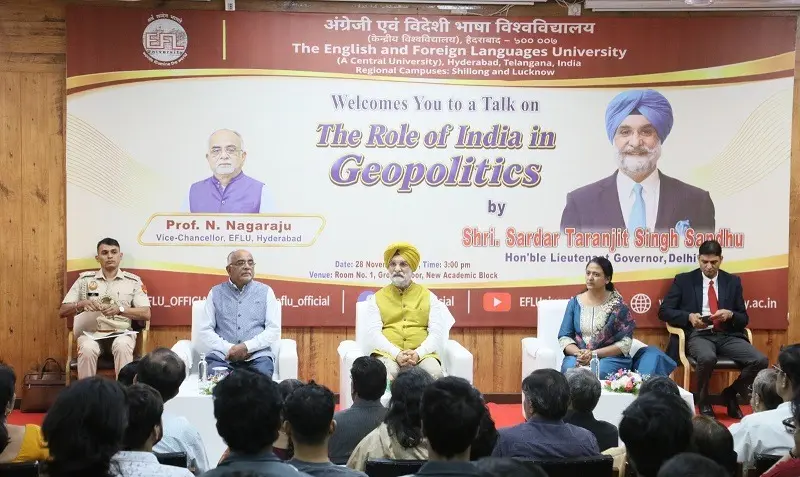
Delhi Lieutenant Governor Sardar Taranjit Singh Sandhu said India’s strategic autonomy allows it to maintain ties with major powers while protecting national interests. He was speaking on ‘India’s Role in Geopolitics’ at the English and Foreign Languages University in Hyderabad on Saturday, 28 November.
Sandhu said shifting geopolitical alignments, resource security concerns, technological competition and regional conflicts were reshaping the world. He cited Vaccine Maitri and India’s affordable medicines and vaccines as examples of its contribution to global healthcare. He also pointed to the nearly 68 per cent of the population in the working-age group, and called for greater capabilities in artificial intelligence, semiconductors and digital technologies. He urged students to turn their talents into productive, commercially viable assets. Sandhu also launched EFLU’s academic journals during the programme.
Indian Opinion Analysis
Hindudayashankar presents the event as a university milestone, giving space to the welcome, Sandhu’s career and the launch of EFLU’s journals. Deccan Chronicle instead leads with the policy argument about balancing ties with major powers, making strategic autonomy the clearest takeaway. The difference is one of emphasis: the university account gives a fuller account of the ceremony, while the shorter report concentrates on Sandhu’s claims. Neither account tests those claims independently, including the stated benefits of India’s global role and digital infrastructure. Both report the working-age share as nearly 68 per cent, a figure attributed to Sandhu’s address.
Coverage: 2 sources, 1 pro-government, 1 neutral
Sources (2): hindudayashankar.com (pro government), deccanchronicle.com (neutral report)
This brief was synthesised by AI from the 2 sources linked above, so one read covers every framing they carry. Methodology and corrections.