













Now Reading: Study: Faster electrification could cut India’s fuel import bill 40%
-
01
Study: Faster electrification could cut India’s fuel import bill 40%

Study: Faster electrification could cut India’s fuel import bill 40%

The Story in Brief
India could reduce its annual fossil fuel import bill by more than 40% to Rs 7.4 lakh crore by FY2035 under an accelerated electrification pathway, according to a study released on Monday, 16 November 2026 by research firm Climate Compatible Futures. Savings could reach Rs 9.6 lakh crore a year compared with the projected Rs 17 lakh crore under the current trajectory.
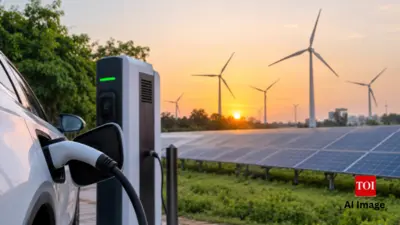
The report, 'Decoupling from Fossil Fuel Imports: An Accelerated Electrification Scenario for India', identifies transport as the biggest opportunity, with electrification potentially displacing 45% of the sector's fossil fuel demand by FY2035. By FY2045, direct fossil fuel imports could fall to zero, against a business-as-usual bill of Rs 23.3 lakh crore annually. Electricity's share of total energy demand could rise from 29% to 54% by FY2035 and 76% by FY2045.
The findings come as India has declined to join the COP31 voluntary '35-by-35' electrification pledge, with Down To Earth reporting Environment Minister Bhupender Yadav saying on 3 November, 'We are not going to sign any pledge. This is their agenda.' The study calls for a national, sector-specific electrification roadmap with milestones for FY2035 and FY2045.
Indian Opinion Analysis
The study's projections of Rs 9.6 lakh crore in annual savings are uniformly reported across all five outlets, with no substantive variance in the key figures. The only distinct framing appears in Down To Earth, which alone reports India's rejection of the COP31 electrification pledge, attributing a direct quote to the environment minister. The other four outlets omit this development entirely, focusing instead on the domestic economic and energy-security benefits of accelerated electrification. A balanced reading treats the report's cost-saving estimates as settled fact across the coverage, but notes that the political context at COP31 is part of the picture only in one outlet. The report's call for a national roadmap with FY2035 milestones is the concrete next step the sources leave open.
Coverage: 5 sources, 5 neutral
Sources (5): timesofindia.indiatimes.com (neutral report), downtoearth.org.in (neutral report), newindianexpress.com (neutral report), economictimes.indiatimes.com (neutral report), businesstoday.in (neutral report)
This brief was synthesised by AI from the 5 sources linked above, so one read covers every framing they carry. Methodology and corrections.