










Now Reading: Supreme Court bars Letters Patent Bench from interfering with writ court order
-
01
Supreme Court bars Letters Patent Bench from interfering with writ court order

Supreme Court bars Letters Patent Bench from interfering with writ court order

The Story in Brief
The Supreme Court has held that a High Court's Division Bench, exercising Letters Patent jurisdiction, cannot interfere with a Single Judge's writ court decision merely because it identifies an error of fact or law or takes a different view. The court ruled that interference is permissible only when findings are 'demonstrably erroneous' and the mistake is 'glaring on the face of record'.
The judgment came in an appeal by R. Saravanan, former Deputy Registrar of Periyar University, who was removed from service in July 2013 after a disciplinary inquiry. A Single Judge of the Madras High Court had set aside the removal, finding the inquiry findings perverse and unsupported by evidence. The Division Bench reversed that decision, restoring the removal. The Supreme Court set aside the Division Bench order, calling it an interference 'without any cogent and justifiable reason'.
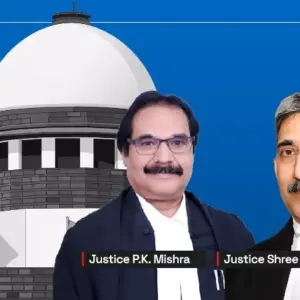
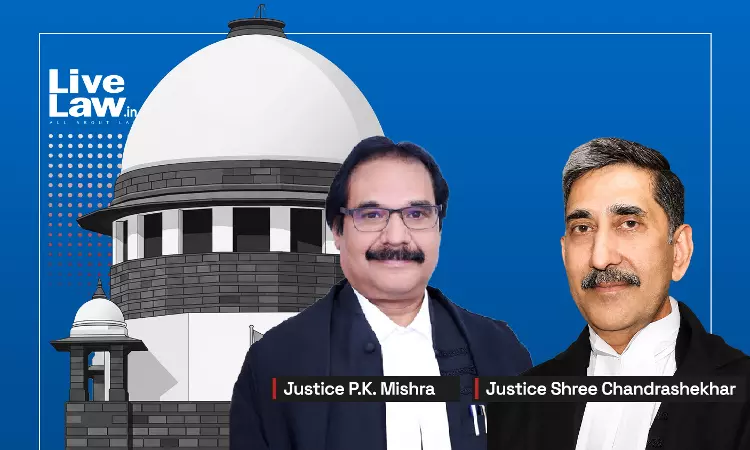
A bench of Justice Prashant Kumar Mishra and Justice Shree Chandrashekhar restored the Single Judge's order. The court also held that disciplinary findings resting on conjecture rather than evidence are perverse and amenable to correction under Article 226.
Indian Opinion Analysis
Both Verdictum and LiveLaw reported the same facts and quotes identically, offering uniform straight coverage of the judgment. Verdictum placed greater emphasis on the disciplinary background, detailing the inquiry officer's quasi-judicial duty and the court's criticism of findings based on conjecture. LiveLaw foregrounded the legal principle, leading with the operative rule and providing a shorter background. Neither outlet added commentary or stance. The shared implication is a clear appellate restraint: a Division Bench cannot substitute its view for a writ court's just and reasonable decision, and the Madras High Court's Division Bench was found to have overstepped that limit.
Coverage: 2 sources, 2 neutral
Sources (2): verdictum.in (neutral report), livelaw.in (neutral report)
This brief was synthesised by AI from the 2 sources linked above, so one read covers every framing they carry. Methodology and corrections.