





















Now Reading: Supreme Court rules appointment letter trumps ITR for accident claims
-
01
Supreme Court rules appointment letter trumps ITR for accident claims



The Story in Brief
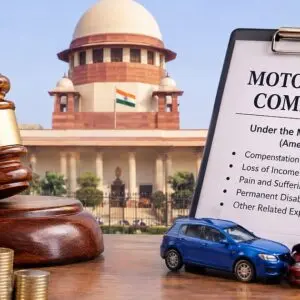
The Supreme Court on Tuesday, 24 November, ruled that in motor accident compensation cases, a claimant's monthly salary as stated in an appointment letter prevails over a higher income figure shown in the Income Tax Return. A bench of Justices Prashant Kumar Mishra and Shree Chandrashekhar dismissed the appeal of Jayprakash Patidar, who had sought enhancement of compensation for injuries from a 2014 accident. The court upheld the assessment of his monthly income at Rs 9,600 based on his appointment letter with Chola Business Services Limited and disability at 35 per cent, despite a medical certificate recording 70 per cent leg impairment.

In a separate ruling, another bench of Justices Ujjal Bhuyan and Atul S Chandurkar modified a Madhya Pradesh High Court order that had enhanced compensation by a lump sum of Rs 2 lakh without examining individual heads of compensation. The court held that a composite increase without indicating the basis is guesswork. It reassessed compensation for a motorcyclist with 50 per cent leg disability at Rs 11,75,106 with 7 per cent interest, using minimum wage notional income of Rs 5,270 per month from 2013, and applied a multiplier of 17 and 40 per cent for future prospects.
Indian Opinion Analysis
The two Supreme Court rulings, one on salary proof and the other on assessing compensation heads, are separate cases but share a procedural point: both fault lower courts for flawed reasoning. Deccan Herald's report emphasises the court's rejection of an ITR figure where an appointment letter fixes salary, a firm pro-government and pro-establishment framing that validates existing documentary proof rules. LiveLaw's account focuses on the court's criticism of the High Court for guessing compensation by lump sum increase without itemising each head, a more critical and reform-oriented framing. Deccan Herald omits the detailed computation and the court's disapproval of guesswork that LiveLaw leads with. LiveLaw downplays the binding force of an appointment letter that Deccan Herald highlights. Together, they show the court demanding structured, evidence-based awards: fixed salary documents settle income, and compensation must be broken down head by head.
Coverage: 2 sources, 1 pro-government, 1 government-critical
Sources (2): deccanherald.com (pro government), livelaw.in (government critical)
This brief was synthesised by AI from the 2 sources linked above, so one read covers every framing they carry. Methodology and corrections.