





















Now Reading: Tadoba deploys sensors to save water for wildlife
-
01
Tadoba deploys sensors to save water for wildlife


The Story in Brief
The Tadoba-Andhari Tiger Reserve (TATR) in Maharashtra's Chandrapur district has introduced a sensor-based system on a pilot basis to regulate water levels at wildlife waterholes, officials said on Wednesday, 21 October. The device automatically starts and stops pumps based on water levels, reducing wastage and ensuring reliable water availability, said Field Director Dr Prabhu Nath Shukla.
TATR has around 130 natural water sources and 350 artificial waterholes, many supported by solar-powered pumps. Despite last summer's intense heat, no water tankers were required to refill the waterholes, the release said. The initiative comes amid drought conditions and uncertainty over future water availability.
The sensor-based system, described as a first-of-its-kind initiative, helps reduce water loss, limit unnecessary groundwater extraction and minimise continuous human monitoring. TATR has also divided its core area into grids to improve water source distribution, with the exercise expected to be completed in 2026.
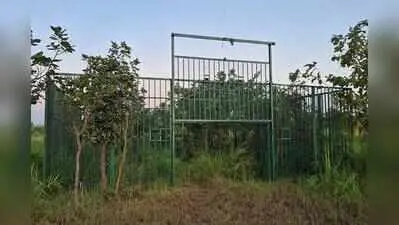
Meanwhile, the Forest Department in the same district has erected a 30×30-foot walk-in enclosure deep inside the Samda forest to trap tiger T-122, suspected of killing three people and injuring another over the past two months. Repeated attempts using conventional baited cages have failed, officials said.
Indian Opinion Analysis
The Hindustan Times report frames the sensor system as a proactive conservation measure, leading with the official announcement and quoting Field Director Dr Prabhu Nath Shukla's description of it as a first-of-its-kind initiative. It highlights the system's benefits, including reduced water wastage and groundwater conservation, and notes the reserve's recent success in avoiding tankers despite heat. The Times of India story also focuses on an innovative Forest Department measure, the walk-in enclosure for tiger T-122, presented as a necessary experiment after conventional methods failed. Both outlets adopt a neutral-report stance, offering no critical perspective or independent expert comment. The coverage uniformly presents these as positive, problem-solving initiatives, with no alternative views or opposition to the approaches.
The sensor system's wider use, as Shukla suggests, could strengthen water conservation across the reserve, but its effectiveness remains to be demonstrated in real conditions.
Coverage: 2 sources, 2 neutral
Sources (2): timesofindia.indiatimes.com (neutral report), hindustantimes.com (neutral report)
This brief was synthesised by AI from the 2 sources linked above, so one read covers every framing they carry. Methodology and corrections.