

















Now Reading: Telangana High Court says public purpose no excuse for land grab
-
01
Telangana High Court says public purpose no excuse for land grab



Blindspot: every source we found covers this story from a government-critical position.
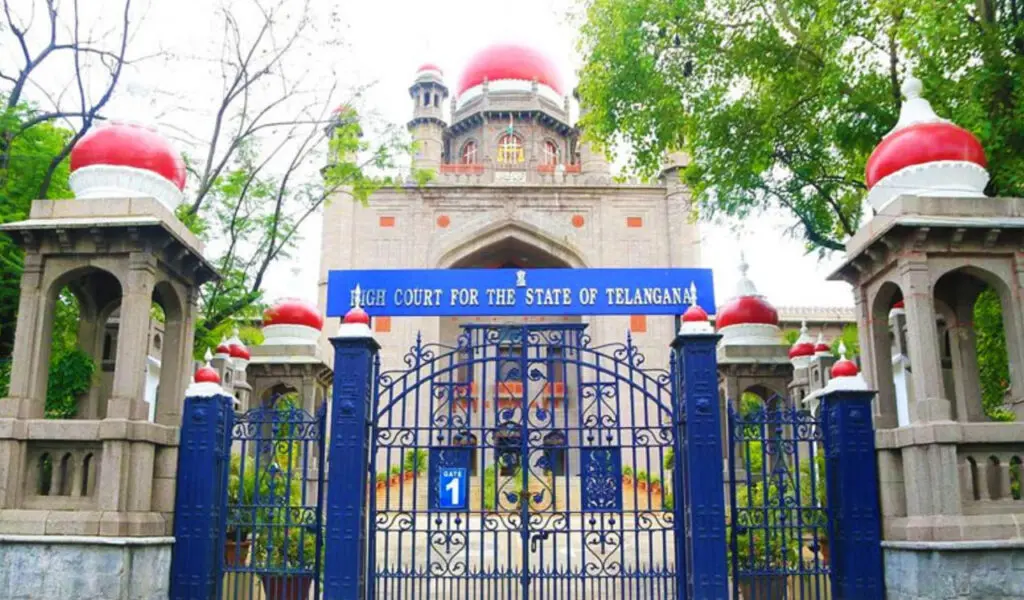
The Telangana High Court has ruled that a government authority cannot retain private property indefinitely without legal acquisition or compensation, even if the land has been used for a public purpose. Justice Vakiti Ramakrishna Reddy directed the state to acquire private land used for the Area Hospital at Bhongir and pay compensation to the owners. The court held that the public purpose of a hospital does not override the constitutional guarantee under Article 300-A, which protects the right to property.
The petitioners had purchased the land through an unregistered sale deed in 1978, which was later validated by a revenue officer in 1982 after payment of deficit stamp duty. They alleged that authorities took possession in 1995 and built the hospital without any acquisition or compensation. The state argued that absence of a Form 13-B certificate meant the petitioners had no enforceable right, but the court rejected this, saying the form is merely evidentiary and the source of rights was the 1982 validation proceedings.
In a separate but related ruling, the same judge held that the obligation to determine rehabilitation and resettlement benefits for affected families does not end with completion of land acquisition. The court directed the district collector to inquire into claims of landless agricultural labourers dependent on lands acquired for the Hyderabad Green Pharma City project, stating that the 2013 land acquisition law protects not just landowners but also labourers and others dependent on the land.
Indian Opinion Analysis
livelaw.in, the original source for both rulings, frames both judgments as clear constitutional victories for citizens against state overreach, leading with the legal principle that public purpose cannot justify unlawful possession. siasat.com reports the Bhongir case in a simpler, more citizen-oriented style, emphasising the human story of owners fighting for compensation. Both outlets agree on the core facts and legal reasoning. The court's consistent message across two different cases is that the state's duty to follow law and compensate people survives even after land is taken and used. The key point is that these rulings reaffirm that the 2013 land acquisition law's protections extend to landless labourers, not just title holders, a significant check on government infrastructure projects.
Coverage: 3 sources, 3 government-critical
Sources (3): livelaw.in (government critical), siasat.com (government critical), livelaw.in (2) (government critical)
This story was synthesised by AI from the 3 sources linked above. Methodology and corrections.
Updated: this story now draws on 3 sources.