



















Now Reading: TNSWA tells Madras High Court construction near Pallikaranai marsh can be regulated
-
01
TNSWA tells Madras High Court construction near Pallikaranai marsh can be regulated

TNSWA tells Madras High Court construction near Pallikaranai marsh can be regulated

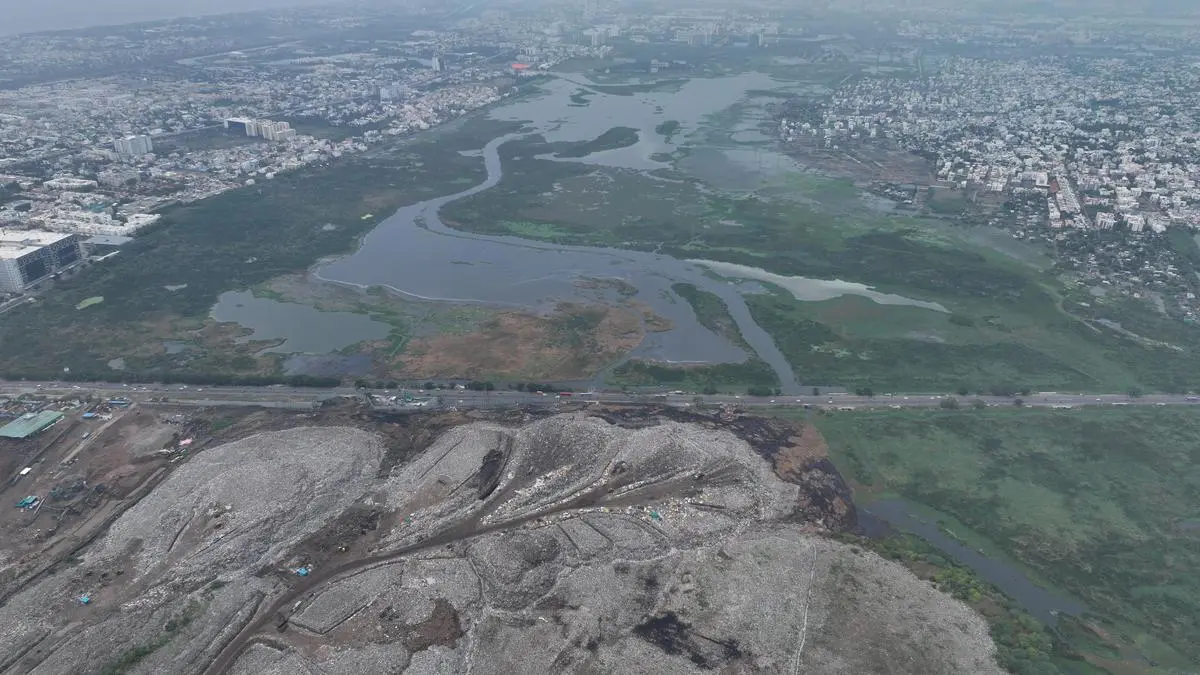
The Tamil Nadu State Wetlands Authority (TNSWA) told the Madras High Court on Thursday (August 20, 2026) that building construction around the 1,247.54-hectare Pallikaranai marshland in Chennai can be regulated rather than banned. The submission, made before the First Division Bench of Chief Justice Sushrut Arvind Dharmadhikari and Justice G. Arul Murugan, was based on a report by the National Centre for Sustainable Coastal Management (NCSCM) proposing a variable-width 'zone of influence' (ZoI).

The NCSCM report recommended an interim ZoI width of zero metres for 30.14 km of the marsh's 77.85 km boundary, zero to 20 metres for 16.16 km, and over 100 metres for 24.55 km. The report found that 59.5% of the boundary requires a ZoI of only 0-20 metres, supporting a site-specific approach over a uniform distance. The proposal responds to petitions by CREDAI-Chennai challenging a National Green Tribunal order that banned construction within a uniform 1 km radius of the marsh.
Additional Advocate General P.V. Balasubramaniam told the court that the NCSCM followed the Wetlands Rules 2017 guidelines, accounting for the marsh's location in a highly urbanised landscape with diffused drainage. The court granted two weeks for petitioners to respond and listed the case for further hearing on September 7, 2026.
Indian Opinion Analysis
The Pallikaranai marsh is one of Chennai's last remaining natural flood buffers and a Ramsar-listed wetland. The NGT's blanket 1 km ban had frozen construction on thousands of plots in areas like Perumbakkam and Medavakkam, where real estate has boomed over the past decade. The TNSWA's variable-width approach, if accepted, could unlock development on land where the ZoI is zero, while keeping tighter controls on hydrologically connected stretches. The court's next hearing on September 7 will test whether the NCSCM's mapping satisfies both conservation rules and property rights. A similar balancing act is under way for the Okhla bird sanctuary in Delhi, where the NGT's 100-metre buffer is being contested.
WATCH: September 7, 2026, when the High Court hears arguments on the interim ZoI.
Source: thehindu.com
This story was synthesised by AI from the source linked above. Methodology and corrections.