





















Now Reading: UP bans ‘puja ghee’ label, orders warnings on non-food packs
-
01
UP bans ‘puja ghee’ label, orders warnings on non-food packs



The Story in Brief
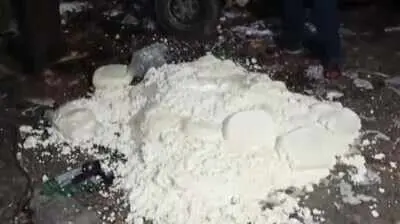
Uttar Pradesh has banned the manufacture, storage and sale of products labelled ‘puja ghee’, the Food Safety and Drug Administration (FSDA) announced on Saturday, 10 October. Commissioner Roshan Jacob directed all food licence holders to stop producing or selling any product under that name, citing risks of accidental consumption of inedible fat-based substances that resemble edible ghee in colour, texture, fragrance and packaging.
Manufacturers may no longer use the word ‘ghee’ on non-food items, including descriptions such as ‘ghee for puja’. Retail packs must display ‘Not for Human Consumption’ in Hindi and English along with a prescribed black cross mark. The FSDA has also barred companies from selling edible ghee and inedible worship products under the same brand name. Stocks found in violation can be seized, and licences or registrations may be suspended. The directions are effective immediately across Uttar Pradesh.
The order flags the risk of cross-contamination when non-food ritual products are manufactured or packaged on premises handling edible oils and fats. The regulator has warned that if chemicals such as paraffin or mineral oil are found in facilities producing edible fats, they will be treated as adulterants under food safety laws.
Update, 13 October 2026: On Monday, 12 October, Business Standard also reports the UP FSDA ban on the ‘puja ghee’ label, citing the same order from commissioner Roshan Jacob on 10 October. It adds that the regulator has warned that if chemicals such as paraffin or mineral oil are found in facilities producing edible fats, they will be treated as adulterants under food safety laws.
Indian Opinion Analysis
The four sources are uniform in their straight reporting of the UP FSDA order, all attributing the ban to commissioner Roshan Jacob’s directive of 10 October and detailing the same labelling requirements. Times Now adds a consumer advisory on checking for the black cross mark and warning, which Business Standard also includes after citing the Hindustan Times report. No source carries a pro-government or critical slant: each presents the regulator’s stated rationale about accidental consumption risk and the enforcement measures. The coverage does not diverge on facts, figures or framing, so the balanced reading is that the order is reported as a straightforward public health measure with no competing political narrative. The next step is enforcement: the FSDA has directed immediate compliance, with stock seizures and licence suspensions for violations across Uttar Pradesh.
Coverage: 4 sources, 4 neutral
Sources (4): timesofindia.indiatimes.com (neutral report), hindustantimes.com (neutral report), timesnownews.com (neutral report), business-standard.com (neutral report)
This brief was synthesised by AI from the 4 sources linked above, so one read covers every framing they carry. Methodology and corrections.