
















Now Reading: UP STF busts Rs 2 crore illegal oxytocin unit in Lucknow
-
01
UP STF busts Rs 2 crore illegal oxytocin unit in Lucknow


The Story in Brief
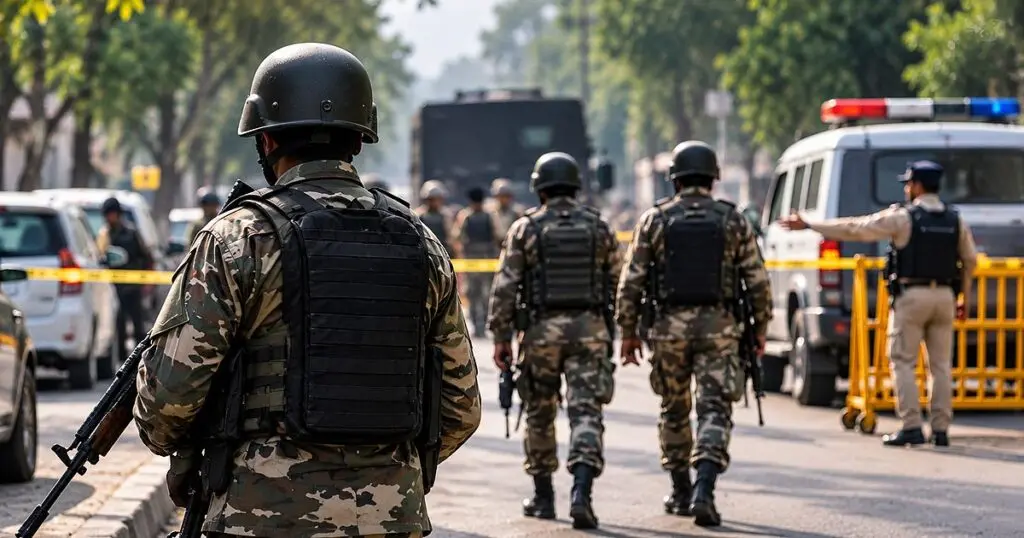
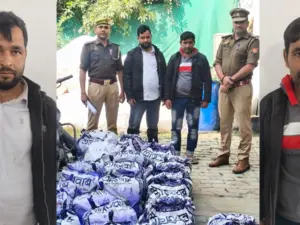
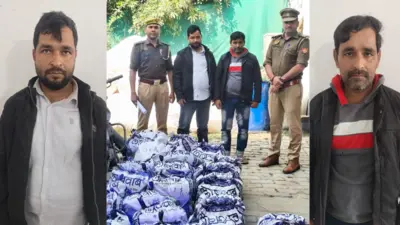
Uttar Pradesh Special Task Force (STF), with local police and drug department officials, raided a house in Lucknow's Dubagga area and busted an illegal oxytocin manufacturing unit. Two men, identified as Irfan and Dildar Ali (or Dildar), were arrested. The Times of India reports seizures worth around Rs 2 crore, while Hindustan Times puts the figure at Rs 2.05 crore.
According to the STF, high-density oxytocin powder was allegedly smuggled from China through Bihar-based suppliers. The powder was then mixed with water, salt, phenyl and other chemicals to prepare liquid oxytocin, which was packed in bottles and plastic pouches and supplied in Lucknow and neighbouring districts. The Times of India says 1.77 lakh plastic packs were seized, Hindustan Times reports 1,77,800 ampoules. Officials said the injections were meant for unauthorised use in livestock and possibly for accelerating fruit and vegetable growth.
Investigators recovered 3,700 bottles of 200 ml each, 35 litres of liquid oxytocin, and three packets of suspected oxytocin powder, along with phenyl, salt, empty bottles, caps, sealing machines and a vehicle. Nine samples have been sent for laboratory testing. A case has been registered under the Bharatiya Nyaya Sanhita and the Drugs and Cosmetics Rules, 1945. The authorities are tracing the suppliers and distribution network.
Indian Opinion Analysis
Both outlets report the raid as a straight law-enforcement action with no discernible slant. The Times of India leads with the Rs 2 crore figure and a detailed modus operandi, while Hindustan Times gives the seizure value as Rs 2.05 crore and specifies that the arrests happened on Monday night. Hindustan Times adds that a case was filed under specific sections of the Bharatiya Nyaya Sanhita and notes that oxytocin must be sold only in single-unit blister packs. The coverage is uniform: both describe the alleged smuggling from China, the mixing with phenyl and salt, and the supply to buffalo keepers and vegetable sellers. Investigators are tracing the Bihar-based suppliers and the buyers.
The uniform reporting leaves no framing gap. The real open point is the lab test results on the nine samples, which will determine the composition of the seized material and whether adulterants are present.
Coverage: 2 sources, 2 neutral
Sources (2): timesofindia.indiatimes.com (neutral report), hindustantimes.com (neutral report)
This brief was synthesised by AI from the 2 sources linked above, so one read covers every framing they carry. Methodology and corrections.