










Now Reading: Uttarakhand Cabinet clears bill to replace 153-year-old irrigation law
-
01
Uttarakhand Cabinet clears bill to replace 153-year-old irrigation law


The Story in Brief
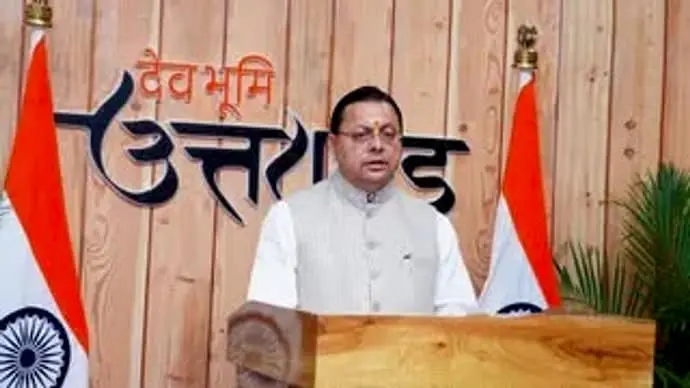
The Uttarakhand Cabinet on Sunday, 4 October 2026, decided to repeal the 153-year-old British-era Northern India Canal and Drainage Act, 1873, and replace it with the Uttarakhand Irrigation and Drainage Bill, 2026. The decision was taken at a meeting chaired by Chief Minister Pushkar Singh Dhami at the NHPC complex in Banbasa, Champawat district, the first cabinet meeting held in his assembly constituency.
The cabinet approved 24 proposals, the Times of India reports, including the Uttarakhand Fiscal Responsibility and Budget Management (Amendment) Bill, 2026, which caps the annual fiscal deficit at 3% of GSDP and cumulative debt at 30% until 2030-31, with relaxations for emergencies. Other approvals include a Rs 200 crore skill enhancement scheme for 1.19 lakh students, revised norms for private universities requiring 2,500 sq m built-up area in hills and 20,000 sq m in plains, and revised salaries for medical staff. The irrigation bill will be tabled in the assembly.
Indian Opinion Analysis
All five sources offer uniform straight reporting of the cabinet decisions, with no discernible slant. The Times of India adds the most detail on the fiscal bill and skill scheme, while Deccan Herald, India Today, and Prashant News focus on the irrigation bill and cultural symbolism. The coverage is wire-style and consensus-driven, emphasising the government's stated rationale of replacing colonial-era law and taking governance to districts. No source challenges the decisions or offers opposition comment. The key next step is the tabling of the irrigation bill in the assembly.
Coverage: 5 sources, 5 neutral
Sources (5): deccanherald.com (neutral report), indiatoday.in (neutral report), timesofindia.indiatimes.com (neutral report), prashantnews.com (neutral report), news.google.com (neutral report)
This brief was synthesised by AI from the 5 sources linked above, so one read covers every framing they carry. Methodology and corrections.
Update, 7 October 2026: this story now draws on 5 sources.