




















Now Reading: Who pays tax on FD interest after a parent’s death? Rules explained
-
01
Who pays tax on FD interest after a parent’s death? Rules explained


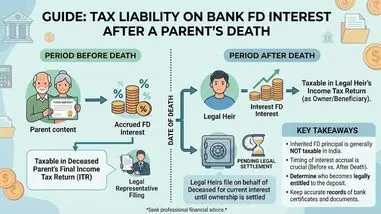
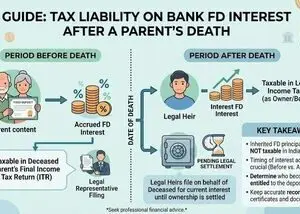
When a parent dies, fixed deposits held in their name raise questions about inheritance, interest income and tax liability. Inherited money is generally not taxable, but interest earned on the deposit may be subject to income tax.
Interest earned up to the date of death is generally taxable in the deceased parent's hands and must be reported through the income tax return by the legal representative, according to Nishant Shanker of Navraj Global Advisors. Interest accruing after death is taxable in the hands of the person legally entitled to it through inheritance.
If the FD remains in the parent's name while the bank processes a claim, heirs should obtain the bank's interest certificate, death certificate and succession documents, and ensure income is reported correctly to avoid tax complications.
Indian Opinion Analysis
The key distinction for heirs is the date of death: interest earned before that date is the deceased's income, reported by the legal heir on a final ITR, interest earned after belongs to the beneficiary. If the FD stays in the parent's name during settlement, the heir must track both periods separately. No rule automatically exempts post-death interest. Heirs should collect the bank's interest certificate and succession documents now, as reporting errors could trigger a tax notice later.
Source: livemint.com
This brief was synthesised by AI from the source linked above. Methodology and corrections.