








Now Reading: Yogi defends voter roll revision as Akhilesh targets bulldozer at EC
-
01
Yogi defends voter roll revision as Akhilesh targets bulldozer at EC


The Story in Brief
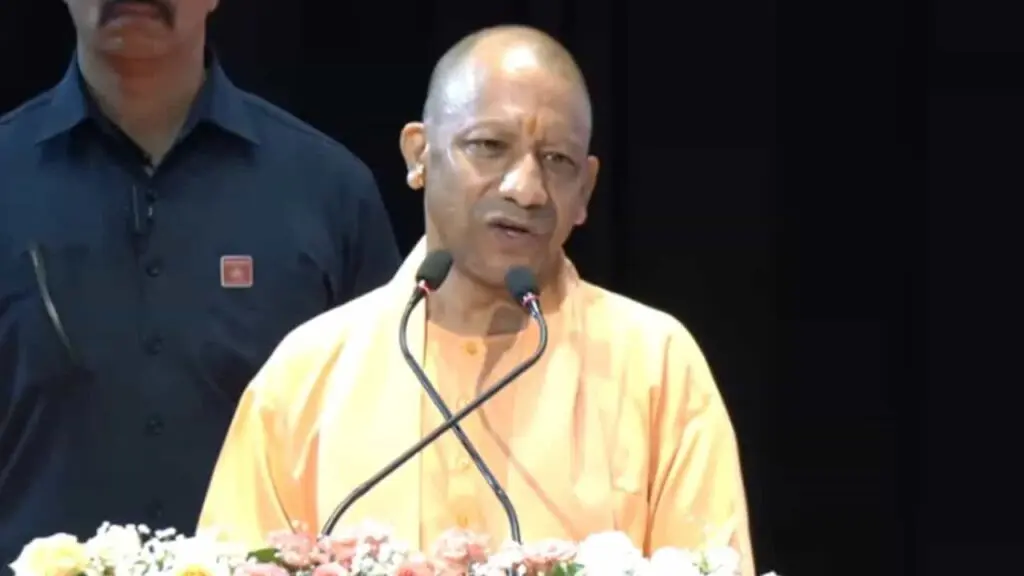
Uttar Pradesh Chief Minister Yogi Adityanath on Wednesday defended the Special Intensive Revision (SIR) of electoral rolls, saying it ensures the 'purity' of voter lists by removing names of deceased persons and non-citizens. He spoke at the News18 Rising Bharat Summit a day after Chief Electoral Officer Navdeep Rinwa said the Election Commission's database does not contain religion or caste data, contradicting Adityanath's claim that 1.27 crore Hindu voters were missing.
Samajwadi Party chief Akhilesh Yadav on Tuesday alleged Adityanath had not repeated the claim after his initial statement, suggesting the EC had warned him. Yadav said the CM should 'turn the steering of his bulldozer towards the Election Commission' and questioned how he obtained the figure. Yadav maintained the real issue was the alleged deletion of votes of backward classes, Dalits and minorities.
Rinwa said the EC's database only contains name, age, gender, address and family details. He said media analyses identifying voters by religion would have required software assistance. The final voter list is available on the EC website.
Indian Opinion Analysis
The three outlets agree on the core facts: Adityanath claimed 1.27 crore Hindu voters were missing, Rinwa denied the EC holds religion data, and Yadav accused the CM of fabrication. The Hindu leads with Yadav's 'turn your bulldozer' taunt and his PDA (backward classes, Dalits, minorities) counter-narrative. Hindustan Times foregrounds Rinwa's technical denial and Adityanath's original claim linking the missing names to opposition vote-bank politics. The Times of India's story, published a day later, gives Adityanath's defence of the SIR process as necessary for 'purity' and his swipe at Congress and Rahul Gandhi. The uniform factual core is the EC's denial of religion data and CM's defence. The analysis yields a clear divergence: The Hindu frames the row as an opposition attack on the CM's credibility, Hindustan Times as a data dispute between the CM and EC, and Times of India as the CM's counter-attack against institutional critics.
Coverage: 3 sources, 1 pro-government, 1 government-critical, 1 neutral
Sources (3): thehindu.com (government critical), hindustantimes.com (neutral report), timesofindia.indiatimes.com (pro government)
This brief was synthesised by AI from the 3 sources linked above, so one read covers every framing they carry. Methodology and corrections.
Update, 18 November 2026: this story now draws on 3 sources.