






Now Reading: 17th ICMGP on mercury pollution opens at IIT Hyderabad
-
01
17th ICMGP on mercury pollution opens at IIT Hyderabad



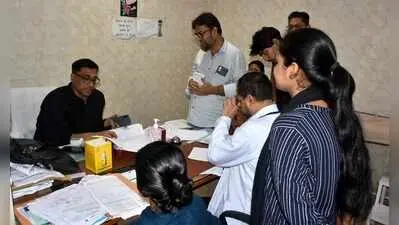
Scientists, policymakers and environmental experts from across the world have gathered at IIT Hyderabad for the 17th International Conference on Mercury as a Global Pollutant (ICMGP 2026), which began on Sunday, 4 October. The six-day event is the first time a conference linked to the Minamata Convention has been hosted in India. The theme is 'Reaching 10 years of enforcement of the Minamata Convention: achievements, challenges and roadmap for the future'.
Sessions will cover mercury monitoring, artisanal and small-scale gold mining, cosmetics, biodiversity, the oil and gas sector, wetlands, and mercury in traditional Indian medicine. The United Nations Environment Programme (UNEP) will co-chair discussions on reducing mercury use. A delegation from Kumamoto Prefecture, Japan, is attending, and a Minamata disease survivor will give testimony. Mae S. Gustin will receive the Kathryn R. Mahaffey Lifetime Achievement Award, and Qingru Wu of Tsinghua University will receive the ICMGP Emerging Researcher Award. The conference concludes on 9 October.
Indian Opinion Analysis
Both outlets report the event as a neutral, factual gathering of global experts, with no discernible political or ideological slant. The Hindu leads with the conference’s first-time-in-India milestone and highlights a session on colourism and mercury in cosmetics, including filmmaker Nina Davuluri’s participation. Deccan Chronicle provides more background on the Minamata Convention’s history, India’s 2018 ratification, and quotes from organisers about boosting participation from Asia and the Global South. The coverage is uniform straight reporting, the key difference is depth of context. The conference runs through 9 October, with policy outcomes and award presentations to watch.
Coverage: 2 sources, 2 neutral
Sources (2): thehindu.com (neutral report), deccanchronicle.com (neutral report)
This brief was synthesised by AI from the 2 sources linked above, so one read covers every framing they carry. Methodology and corrections.