















Now Reading: 261 Indian cities exceeded WHO PM2.5 guideline in October
-
01
261 Indian cities exceeded WHO PM2.5 guideline in October


The Story in Brief
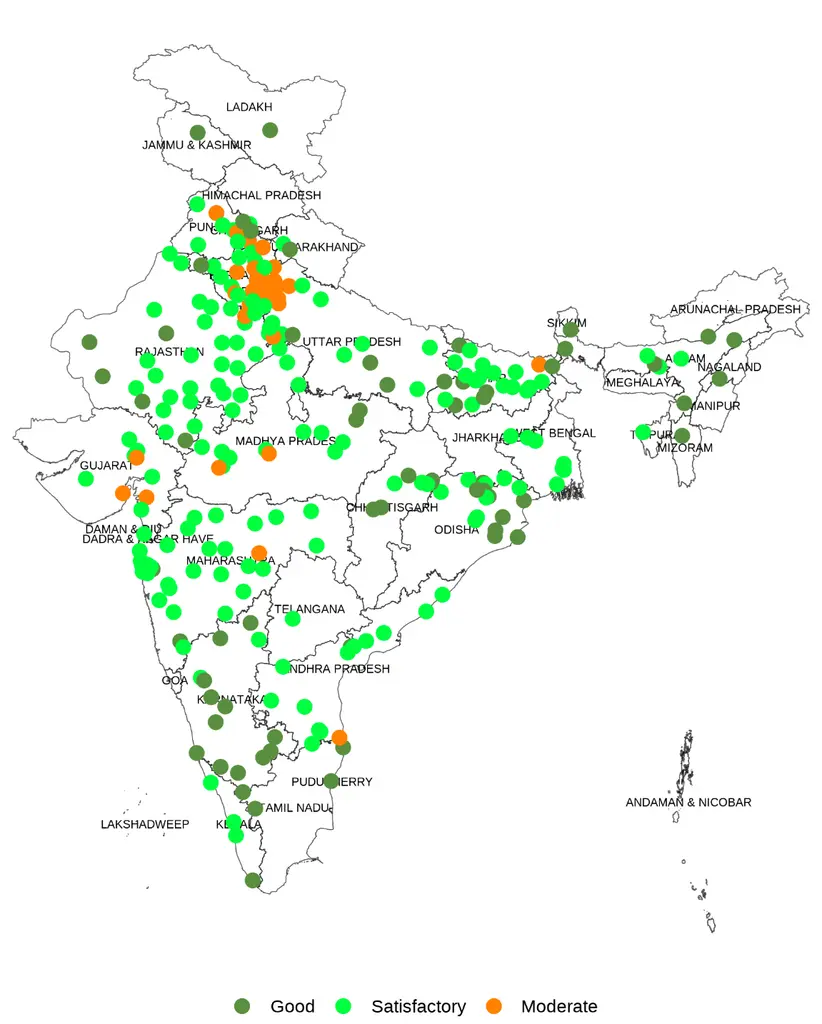
In October 2026, 261 of 267 Indian cities with sufficient monitoring data exceeded the WHO daily PM2.5 guideline of 15 µg/m³, according to a Centre for Research on Energy and Clean Air snapshot. Baraut in Uttar Pradesh was the most polluted city with a monthly average of 87 µg/m³. Six cities complied with WHO guidelines, and 229 cities met India’s NAAQS of 60 µg/m³.
In Lucknow, air quality slipped into the ‘poor’ category on 4 November, four days before Diwali, with the AQI climbing to 223, a nearly five-fold rise in four days. The UP Pollution Control Board has formed three-member teams to patrol the city and check violations at construction sites and garbage burning. Several western UP cities including Noida recorded ‘very poor’ air.
Indian Opinion Analysis
The energyandcleanair.org report offers a national quantitative overview, finding 261 cities exceeded WHO PM2.5 guidelines and identifying Baraut as the most polluted city. Hindustan Times focuses on a single-city deterioration in Lucknow, with AQI jumping five-fold to 223 ahead of Diwali. The national study emphasises Uttar Pradesh as a hotspot and cites IIT studies on source contributions, while the local report details enforcement teams and monitoring station data. Both sources agree pollution is rising with winter onset and point to construction, road dust and stubble burning as drivers. The uniform coverage across scales is consistent: the NCAP phase has ended and enforcement is beginning locally.
Coverage: 2 sources, 2 neutral
Sources (2): energyandcleanair.org (neutral report), hindustantimes.com (neutral report)
This brief was synthesised by AI from the 2 sources linked above, so one read covers every framing they carry. Methodology and corrections.