

















Now Reading: AERA cuts Hyderabad airport UDF, introduces arrival fee
-
01
AERA cuts Hyderabad airport UDF, introduces arrival fee


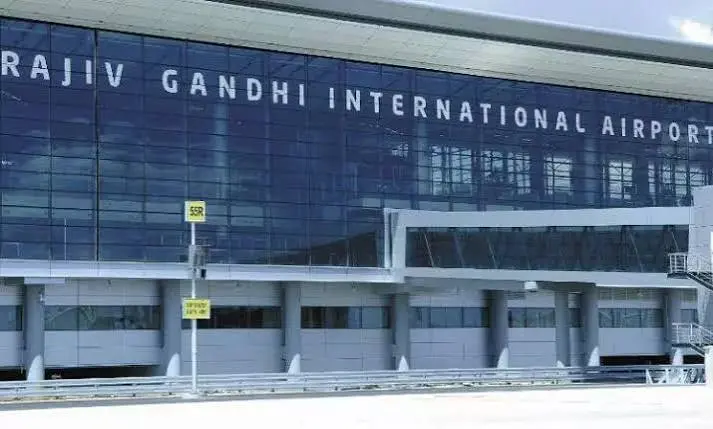
Aviation regulator AERA has reduced the user development fee (UDF) for departing passengers at Hyderabad airport and introduced a UDF for arriving passengers for the first time, effective September 1. The UDF for departing domestic passengers has been cut to Rs 515 from Rs 750, and for departing international passengers to Rs 1,030 from Rs 1,500. Arriving domestic passengers will pay Rs 220 and international arrivals Rs 440, Deccan Chronicle and Livemint report.
The tariff order covers the period from September 1, 2026, to March 31, 2031, under an incremental Aggregate Revenue Requirement (ARR) framework. Under this, cost recovery through airport charges is linked to the actual completion of high-value capital projects. AERA approved a baseline ARR of Rs 11,683.49 crore for GMR Hyderabad International Airport Ltd (GHIAL), against the Rs 27,851 crore sought by the operator.
AERA has also allowed a variable tariff plan with landing-charge incentives for airlines to expand routes and traffic. Additional UDF charges linked to the Northern Runway and Northern Precinct projects, scheduled for commissioning in September 2029, will apply from November 2029. The regulator said the approach protects users from paying for assets not yet operational.
Indian Opinion Analysis
Both Deccan Chronicle and Livemint provide neutral, factual coverage of the AERA order, with no discernible slant. Livemint offers greater detail on the phased tariff increases linked to future runway and terminal projects, while Deccan Chronicle focuses on the immediate fee reductions. The balanced reading confirms a significant regulatory shift: AERA is moving to a pay-for-use model that splits charges between departing and arriving passengers, and ties higher fees to completed infrastructure. The key number to watch is the November 2029 baseline UDF of Rs 701 for domestic departures if both projects are commissioned.
Coverage: 2 sources, 2 neutral
Sources (2): deccanchronicle.com (neutral report), livemint.com (neutral report)
This story was synthesised by AI from the 2 sources linked above. Methodology and corrections.
Updated: this story now draws on 2 sources.