















Now Reading: CJI Surya Kant says AI can assist but not replace judges
-
01
CJI Surya Kant says AI can assist but not replace judges


The Story in Brief
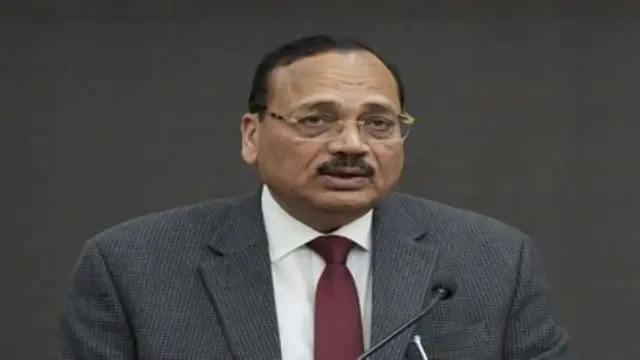
Chief Justice of India Surya Kant said on 1 October that artificial intelligence can assist judicial work but cannot replace judges, as legal reasoning and decisions must remain with human judges. Speaking at the VII Congress of the Association of Asian Constitutional Courts in Samarkand, Uzbekistan, he said technological change must be guided by constitutional commitments to liberty, equality and access to justice.
The CJI cited initiatives including SUVAS, an AI tool that has published over 83,000 translations into 18 Indian languages, and Su-Sahayak, an AI chatbot on the Supreme Court website. He said the eCourts Mission Mode Project has supported digitisation since 2011, and that between March 2020 and June 2024 the Supreme Court held over 750,000 hearings via video conferencing. He acknowledged unequal digital access, data security and accountability for algorithms remain concerns.
On 4 October, the CJI met Uzbekistan Supreme Court Chairperson Robakhon Makhmudova in Tashkent and discussed judicial cooperation and the use of AI and digital technology, according to the Embassy of India in Tashkent.
Update, 5 October 2026: The Hans India reported on 4 October that CJI Surya Kant met Uzbekistan Supreme Court Chairperson Robakhon Makhmudova in Tashkent and discussed judicial cooperation and the use of AI and digital technology. This bilateral meeting is not mentioned in the other five sources, which focus on his Samarkand speech.
Indian Opinion Analysis
The six outlets cover the CJI’s Samarkand speech with near-identical PTI copy, all leading with his call to balance AI-driven transformation with constitutional values. National Herald India provides the most detailed account, including specific constitutional articles and the ‘One Case, One Data’ initiative, while NDTV Profit and CNBC TV18 offer shorter versions. The Hans India adds a new development not in other sources: the CJI’s bilateral meeting with Uzbekistan’s Supreme Court chairperson on 4 October, where AI and digital technology were discussed. The uniform core coverage across outlets is straight reporting, with no discernible slant. The Hans India’s additional report on the bilateral meeting is also neutral-report. The only significant difference is the inclusion of the meeting, which no other outlet mentions, but it does not change the overall framing of the story.
CJI Surya Kant’s call for balancing AI with constitutional values was uniformly reported across outlets, with National Herald India providing the most detailed account including specific constitutional articles and the ‘One Case, One Data’ initiative.
Coverage: 6 sources, 6 neutral
Sources (6): nationalheraldindia.com (neutral report), cnbctv18.com (neutral report), ndtvprofit.com (neutral report), business-standard.com (neutral report), nagalandpost.com (neutral report), thehansindia.com (neutral report)
This brief was synthesised by AI from the 6 sources linked above, so one read covers every framing they carry. Methodology and corrections.