






















Now Reading: Three airlines hike fuel surcharges from October 9
-
01
Three airlines hike fuel surcharges from October 9


The Story in Brief
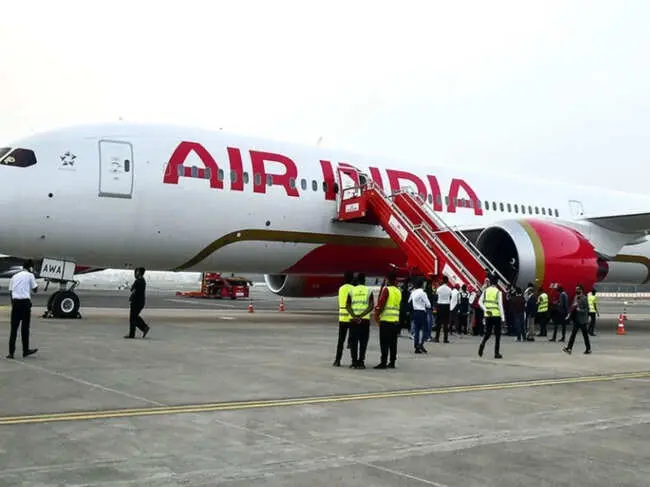
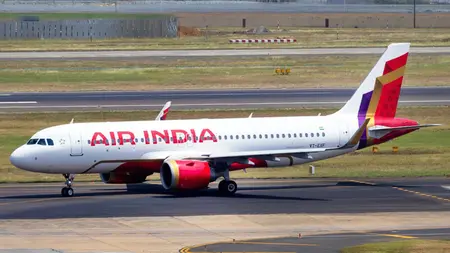
Air India, Air India Express and Akasa Air raised or introduced fuel surcharges from Friday, 9 October, days after IndiGo increased its own levies. The airlines cited sustained volatility in aviation turbine fuel (ATF) prices driven by geopolitical tensions in the Middle East. ATF accounts for about 40 per cent of an airline's operating costs, the Federation of Indian Airlines (FIA) says the share has risen to 55 to 60 per cent.
Air India and Air India Express will levy domestic surcharges of Rs 400 for flights up to 500 km, rising to Rs 1,200 for flights above 1,500 km. International surcharges range from USD 55 for West Asia to USD 215 for North America. Akasa Air will charge Rs 375 for domestic flights up to 500 km and Rs 1,150 for those above 1,500 km, with a uniform Rs 2,500 on routes to six countries including the UAE and Thailand. The revised charges apply to new bookings from 12.01 am for Akasa Air, midnight for Air India Express, and 11 am for Air India.
The FIA, representing Air India, IndiGo and SpiceJet, has sought government intervention, including a review of the ATF pricing formula. Civil Aviation Minister K Ram Mohan Naidu said on 6 October the government is considering reviving its ATF Price Stabilisation Fund.
Indian Opinion Analysis
Coverage of the surcharge hikes is uniformly factual across all 29 sources, with every outlet reporting the distance-based slabs and effective dates in near-identical wire-style language. The Times of India adds the context of a weakening rupee acting as a 'double whammy' and notes domestic air traffic beginning to decline. The Hindu Businessline alone reports that airlines are seeking the release of VAT relief funds, which they say oil marketing companies are withholding to recover June losses. The Hindu reports that the fare gap between Indian budget carriers and foreign full-service airlines on West Asian routes has narrowed to around Rs 1,000 to 2,000, making foreign carriers more attractive. The Economic Times reports that early-bird advance booking advantages are vanishing as airlines keep fares high months ahead due to reduced capacity and fuel cost uncertainty.
Coverage: 29 sources, 29 neutral
Sources (29): orissapost.com (neutral report), economictimes.indiatimes.com (neutral report), ndtvprofit.com (neutral report), timesnownews.com (neutral report), thehansindia.com (neutral report), yespunjab.com (neutral report), timesofindia.indiatimes.com (neutral report), orissapost.com (2) (neutral report), thehindubusinessline.com (neutral report), economictimes.indiatimes.com (2) (neutral report), thehindu.com (neutral report), indiatvnews.com (neutral report), hindustantimes.com (neutral report), businesstoday.in (neutral report), sambadenglish.com (neutral report), business-standard.com (neutral report), economictimes.indiatimes.com (3) (neutral report), indiatoday.in (neutral report), mathrubhumi.com (neutral report), mid-day.com (neutral report), timesofindia.indiatimes.com (2) (neutral report), economictimes.indiatimes.com (4) (neutral report), businesstoday.in (2) (neutral report), thehindubusinessline.com (2) (neutral report), thehindubusinessline.com (3) (neutral report), thehindubusinessline.com (4) (neutral report), deccanchronicle.com (neutral report), thehindu.com (2) (neutral report), economictimes.indiatimes.com (5) (neutral report)
This brief was synthesised by AI from the 29 sources linked above, so one read covers every framing they carry. Methodology and corrections.
Update, 11 October 2026: this story now draws on 29 sources.