















Now Reading: Airtel: Same rules for satcom players using mobile spectrum
-
01
Airtel: Same rules for satcom players using mobile spectrum


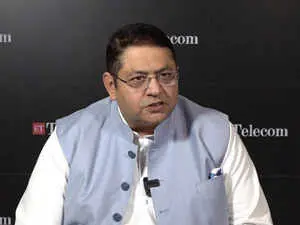
Bharti Airtel has called for satellite communication (satcom) companies that intend to use spectrum currently used by mobile service providers to face the same regulatory conditions as telecom operators. Rahul Vatts, Director for Corporate Affairs and Group Chief Regulatory Officer at Airtel, made the statement on Friday, 9 October 2026, at the India Mobile Congress.
Currently, telecom operators acquire spectrum for mobile services through auctions, while satcom players receive spectrum via an administrative process under the Telecommunications Act, 2023. Vatts argued that Direct-to-Device technology, where satellites transmit signals directly to mobile phones, uses the same spectrum as mobile players and should therefore be subject to auction, pricing, licensing, and security requirements identical to those for telecom firms.
He cited the Supreme Court's 2012 order in the 2G case that any spectrum for commercial use must be auctioned. Satcom players have opposed auction-based allocation on technical grounds, arguing before the Telecom Regulatory Authority of India (Trai) that frequencies cannot be exclusively owned. Elon Musk's Starlink has acquired spectrum in the 800 MHz band for mobile services from space.
Indian Opinion Analysis
Both sources carry the same PTI wire copy, offering identical neutral-report coverage of Rahul Vatts's demand for uniform rules on satcom players using mobile spectrum. The framing is straight reporting: Vatts's argument, the current regulatory divide, the Supreme Court precedent, and Starlink's 800 MHz acquisition are all presented without editorial comment. Neither outlet adds its own judgement or omits a significant detail. The uniform coverage leaves the core tension clear: Airtel invokes legal precedent and policy to press for auction-based allocation of Direct-to-Device spectrum, while satcom players maintain that shared frequencies make exclusive ownership unworkable. The next move rests with Trai and the government on how to classify Direct-to-Device spectrum under the 2023 Act.
Coverage: 2 sources, 2 neutral
Sources (2): economictimes.indiatimes.com (neutral report), fortuneindia.com (neutral report)
This brief was synthesised by AI from the 2 sources linked above, so one read covers every framing they carry. Methodology and corrections.