



















Now Reading: Amit Shah hits back at Rahul Gandhi with 7.8% GDP growth data
-
01
Amit Shah hits back at Rahul Gandhi with 7.8% GDP growth data



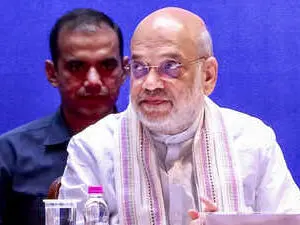
Union Home Minister Amit Shah on Friday countered Congress leader Rahul Gandhi's 'dead economy' remark, citing India's 7.8% GDP growth in the April-June 2026 quarter. Speaking at the UP International Trade Show…
Union Home Minister Amit Shah on Friday countered Congress leader Rahul Gandhi's 'dead economy' remark, citing India's 7.8% GDP growth in the April-June 2026 quarter. Speaking at the UP International Trade Show in Greater Noida, Shah said those with a 'dead mindset' cannot see the economy's vibrancy. He pointed to Moody's raising India's growth forecast from 6% to 7% and Japan's JCR upgrading India's sovereign rating to A-.
Shah highlighted 12 semiconductor projects worth over Rs 1.64 lakh crore, record defence production of Rs 1.78 lakh crore, and Rs 12.22 lakh crore in budgeted capital expenditure. He said India remained the fastest-growing major economy despite global turmoil. Rahul Gandhi had in July 2025 called the economy 'dead' and accused PM Modi of destroying youth jobs.
The opposition has questioned the GDP data, citing concerns over revisions in economic estimates. Newslaundry separately reported that while GDP shows 7.8% growth, 56.2% of the workforce is self-employed, 43% remains in agriculture, and household debt has risen to 45.5% of GDP, suggesting a gap between the headline figure and ground realities.
Indian Opinion Analysis
The coverage splits along predictable lines. Pro-government sources like Times of India and New Indian Express lead with Shah's rebuttal and positive indicators like rating upgrades, omitting opposition's data concerns. Government-critical Newslaundry leads with structural weaknesses: high self-employment, stagnant manufacturing jobs, and rising household debt. ETV Bharat reports both Shah's speech and the opposition's questioning of GDP methodology, offering a more balanced account. The key tension is whether 7.8% growth reflects broad prosperity or masks rising inequality and debt. The next flashpoint will be the quarterly employment data due in November 2026.
The coverage splits along predictable lines. Pro-government sources like Times of India and New Indian Express lead with Shah's rebuttal and positive indicators like rating upgrades, omitting opposition's data concerns. Government-critical Newslaundry leads with structural weaknesses: high self-employment, stagnant manufacturing jobs, and rising household debt.
Coverage: 5 sources, 2 pro-government, 1 government-critical, 2 neutral
Sources (5): newslaundry.com (government critical), timesofindia.indiatimes.com (pro government), moneycontrol.com (neutral report), newindianexpress.com (pro government), etvbharat.com (neutral report)
This brief was synthesised by AI from the 5 sources linked above, so one read covers every framing they carry.
Updated: this story now draws on 5 sources.