















Now Reading: BIMSTEC adopts Delhi Declaration to combat terror financing
-
01
BIMSTEC adopts Delhi Declaration to combat terror financing



The Story in Brief
BIMSTEC home ministers on Tuesday, 13 October 2026, adopted the Delhi Declaration, vowing to combat cross-border terrorism, terror financing, radicalisation, drug trafficking, human trafficking, cybercrime and organised crime. India hosted the grouping’s first Home Ministers’ Meeting, chaired by Union Home Minister Amit Shah.
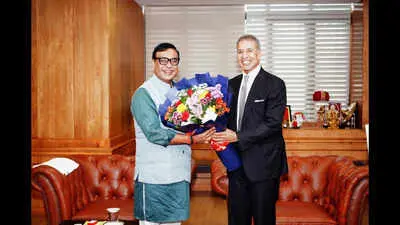
Bangladesh Home Minister Salahuddin Ahmed skipped the meeting, Dhaka was represented by Home Affairs Senior Secretary Manzur Morshed Chowdhury. The move follows strained ties after the ouster of the Sheikh Hasina government in August 2024. Last month Prime Minister Tarique Rahman also skipped the BRICS outreach session in New Delhi.
Shah outlined five priority areas: drug control, counter-terrorism and legal cooperation, repatriation of fugitive criminals, cybersecurity, and institutional capacity building. The meeting approved a convention against trafficking in persons, a plan of action on drug control, an MoU to combat money-laundering and terror financing, and a disaster-preparedness plan. Bhutan, Myanmar, Nepal, Sri Lanka and Thailand sent their home ministers or senior representatives.
Update, 15 October 2026: Economic Times, in a separate report, adds that Shah also met Nepal’s Home Minister Sudhan Gurung on the sidelines, discussing border security and crime, and confirming Nepal’s appreciation for India’s flood aid. Nagaland Post carries PTI’s wire report on Shah’s speech, confirming the earlier coverage of the declaration and approved pacts.
Indian Opinion Analysis
The adoption of the Delhi Declaration and the approving of the pacts dominate the post-meeting coverage, with Hindustan Times, Indian Express, Times of India, The Hindu, Economic Times and India Today all reporting the same set of agreements in a uniform wire style. Shah’s speech is framed by most outlets as a strong regional leadership pitch, with his ‘zero tolerance’ and ‘death triangle’ remarks quoted prominently. The Hindu adds specifics on the declaration’s text, including reference to the UN Security Council’s 1267 Sanctions Committee, while Economic Times highlights India’s offer of police training and forensic expertise. The Bangladesh delegation’s composition is covered neutrally, with Livemint noting Dhaka’s signal of wanting a ‘reset’ in ties. What remains open is how the approved convention and plans will be implemented on the ground, with no date set for the next home ministers’ meeting.
Coverage: 25 sources, 25 neutral
Sources (25): hindustantimes.com (neutral report), indiatoday.in (neutral report), hindustantimes.com (2) (neutral report), economictimes.indiatimes.com (neutral report), thehansindia.com (neutral report), hindustantimes.com (3) (neutral report), hindustantimes.com (4) (neutral report), thehindu.com (neutral report), deccanchronicle.com (neutral report), thefederal.com (neutral report), economictimes.indiatimes.com (2) (neutral report), timesofindia.indiatimes.com (neutral report), yespunjab.com (neutral report), livemint.com (neutral report), hindustantimes.com (5) (neutral report), thehindubusinessline.com (neutral report), thehindu.com (2) (neutral report), economictimes.indiatimes.com (3) (neutral report), economictimes.indiatimes.com (4) (neutral report), business-standard.com (neutral report), indiatoday.in (2) (neutral report), indianexpress.com (neutral report), timesofindia.indiatimes.com (2) (neutral report), economictimes.indiatimes.com (5) (neutral report), nagalandpost.com (neutral report)
This brief was synthesised by AI from the 25 sources linked above, so one read covers every framing they carry. Methodology and corrections.