


Now Reading: Bombay HC orders BMC to enforce 11pm neon light deadline
-
01
Bombay HC orders BMC to enforce 11pm neon light deadline


The Story in Brief
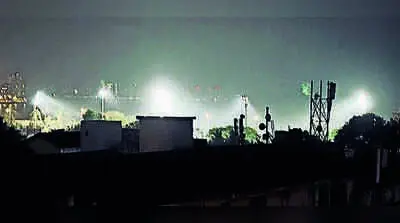
The Bombay High Court on Friday, 9 October 2026, directed the Brihanmumbai Municipal Corporation (BMC) to strictly comply with a February 1998 order requiring neon lights to be switched off by 11 pm across Mumbai and Thane. The order came during a hearing on a petition filed by Nilesh Desai, a Charni Road resident and IT professional, alleging light pollution from high-intensity floodlights and illuminated billboards.
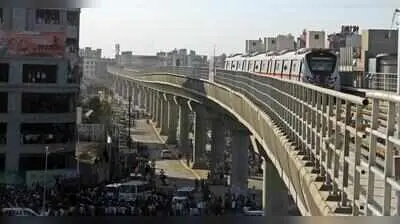
Desai’s plea states that floodlights at three gymkhanas along Marine Drive, Wilson Gymkhana, Islam Gymkhana and Police Gymkhana, are left on late into the night for sporting events and social functions, disturbing residents’ sleep. The petition also flags high-mast lights at Mumbai Metro construction sites and cites light measurements of up to 84,800 lux near Wilson Gymkhana, compared with ambient levels of about 2,100 lux. Desai has been complaining to authorities since 2016. The bench of Chief Justice M C Tripathi and Justice Advait Sethna adjourned the hearing to 20 November 2026.
Update, 11 October 2026: The Hindustan Times reports that the court directed the BMC to strictly comply with the February 1998 neon-light deadline, while LiveLaw reports the court ordered the Maharashtra government to effectively implement the order in 2026. Both also note that Desai is an avid wildlife and astrophotographer. The Free Press Journal adds that Desai’s petition calls for ‘dark sky’-friendly zones and restrictions after 10 pm. The hearing remains set for 20 November.
Indian Opinion Analysis
The Hindustan Times and LiveLaw both lead with the court’s explicit directive to the BMC to enforce the 1998 neon-light deadline, framing the story as judicial action on an old order. The Times of India and Free Press Journal focus on the petition’s allegations and the health and environmental arguments, giving more space to the petitioner’s decade-long complaints. All four sources report the same core facts, the 11 pm direction, the 20 November hearing and the gymkhana lights, making the coverage largely uniform straight reporting. The key difference is emphasis: the first two outlets foreground the court’s order, while the latter two foreground the petitioner’s narrative. No source conflicts on any fact. The next concrete event is the 20 November hearing, when the state government must file its affidavit.
Coverage: 4 sources, 4 neutral
Sources (4): timesofindia.indiatimes.com (neutral report), freepressjournal.in (neutral report), hindustantimes.com (neutral report), livelaw.in (neutral report)
This brief was synthesised by AI from the 4 sources linked above, so one read covers every framing they carry. Methodology and corrections.