














Now Reading: BRICS nations agree to strengthen ocean, polar science cooperation in Goa
-
01
BRICS nations agree to strengthen ocean, polar science cooperation in Goa

BRICS nations agree to strengthen ocean, polar science cooperation in Goa

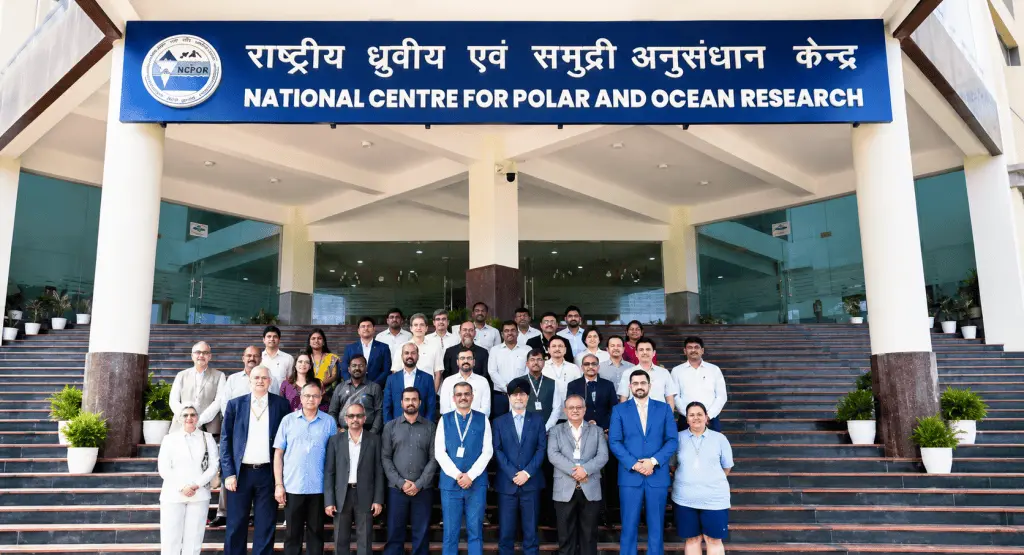
India hosted the 8th BRICS Working Group meeting on ocean and polar science in Goa from August 12 to 14, 2026, during its BRICS Presidency. The Ministry of Earth Sciences convened talks among delegates from Brazil, China, Egypt, India, Indonesia, Russia, South Africa and the United Arab Emirates at the National Centre for Polar and Ocean Research.
Participating countries agreed on joint initiatives to strengthen coastal resilience, study polar and ocean biodiversity, and promote capacity building for young researchers. India will now coordinate finalising a roadmap including an action plan for the OPST Working Group.
Union Earth Sciences Secretary Dr T. Srinivasa Kumar Tummala urged members to turn outcomes into concrete collaboration, such as joint research, scientist exchanges and shared infrastructure. Countries reaffirmed their commitment to closer partnerships in ocean and polar science.
Indian Opinion Analysis
In the original article, the objective facts of the BRICS working group meeting are well covered. However, the deeper context is that India’s BRICS Presidency in 2026 is unfolding against a backdrop of geopolitical shifts, where India seeks to balance its role in a bloc that includes China and Russia while also deepening ties with the West. The focus on ocean and polar science is strategically important because of the growing economic and security significance of the Indian Ocean and the Arctic. For India, which has major coastal cities like Mumbai and Chennai, the commitment to coastal resilience here is a direct policy goal under the Sagarmala and National Coastal Zone Management projects. The next concrete step to watch is whether this meeting leads to an increase in India’s budget allocation for polar research (currently around Rs 500 crore annually) or formalises joint Antarctic expeditions with Brazil and South Africa, which would signal real collaboration beyond the meeting room.
Source: ddindia.co.in
This story was synthesised by AI from the source linked above. Methodology and corrections.