












Now Reading: Cash transfer politics strain state finances, says Frontline analysis
-
01
Cash transfer politics strain state finances, says Frontline analysis


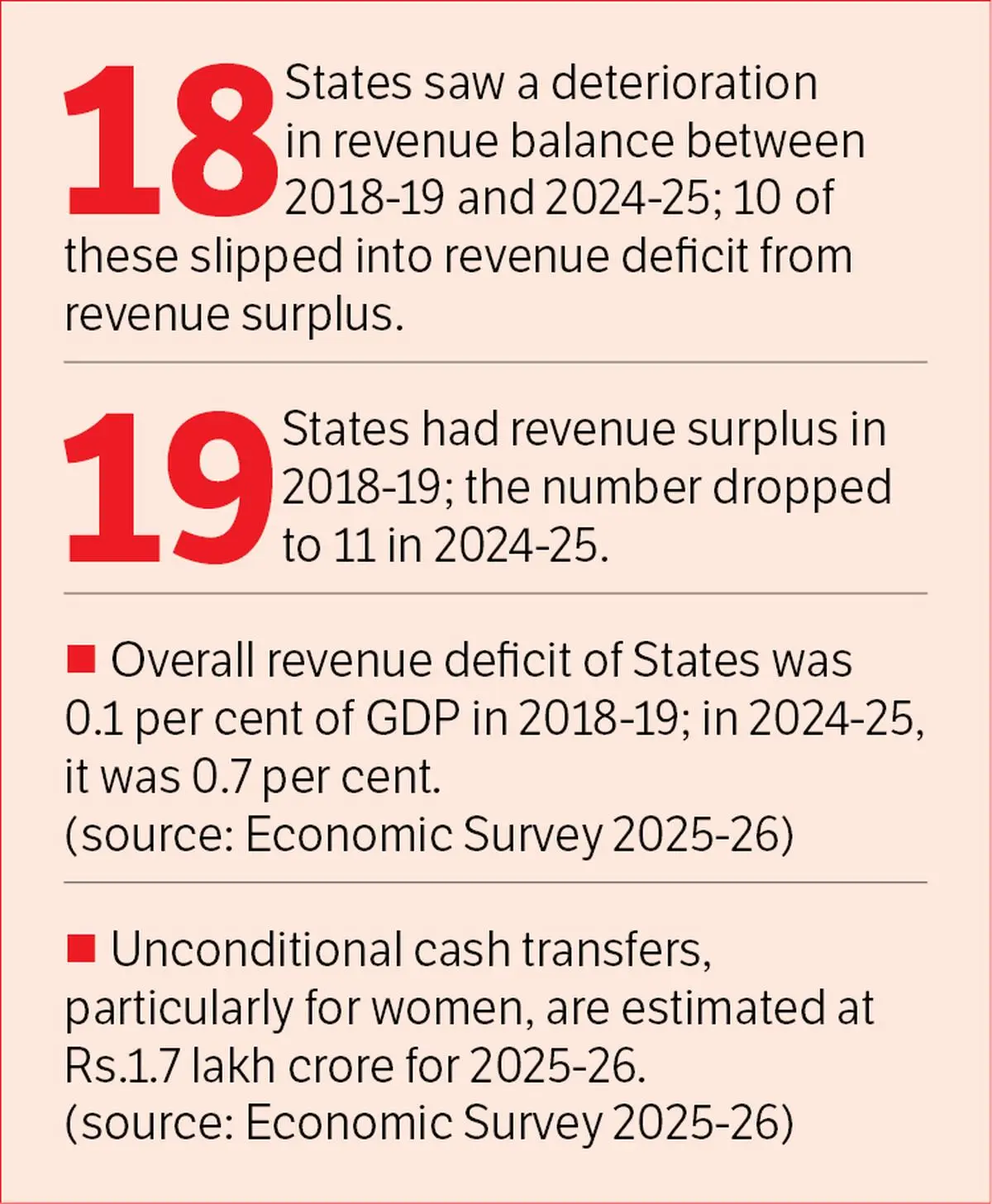
The Delhi government's launch of the Lakshmi Yojana on August 1, offering Rs 2,500 monthly to eligible women, has sparked debate on the fiscal burden of such schemes. Goa started cash transfers for women in 2013, and 17 states now offer them, driven by competitive politics as female voter turnout rises.
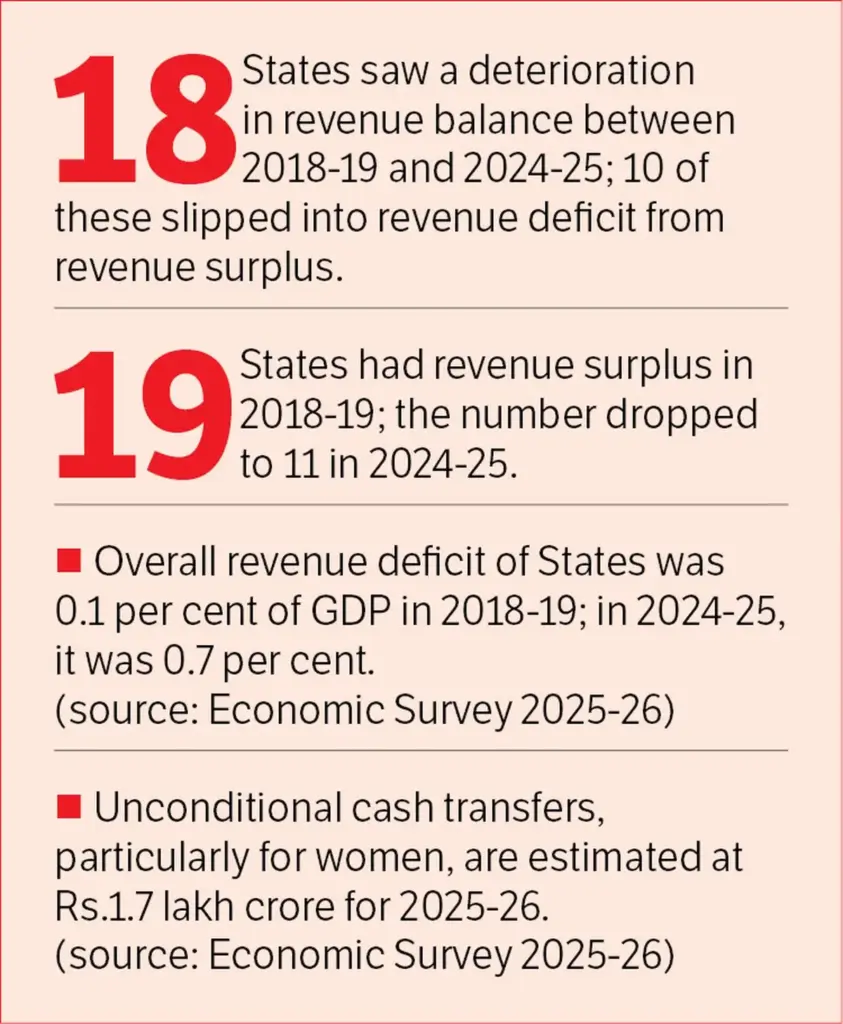
Experts cited in the report note that cash transfers to women improve household spending on nutrition, health, and education, with global evidence showing reduced intimate partner violence and increased savings. However, India-specific large-scale evidence is limited, and the schemes consume significant portions of state budgets, raising concerns about long-term fiscal sustainability.
Indian Opinion Analysis
The report frames cash transfers as politically popular but fiscally risky. With 17 states offering them, the aggregate annual cost likely exceeds Rs 1 lakh crore, competing with capital spending on infrastructure. The RBI's state finances report for 2024-25 showed states' fiscal deficits averaging 3.2% of GDP, leaving little room for new entitlements. Watch for the next Finance Commission's recommendations on tax devolution, which will determine how much fiscal space states have to sustain these schemes without cutting other welfare or investment.
Source: frontline.thehindu.com
This story was synthesised by AI from the source linked above. Methodology and corrections.