




















Now Reading: CBDT revises Form 161 for penalty waiver requests
-
01
CBDT revises Form 161 for penalty waiver requests



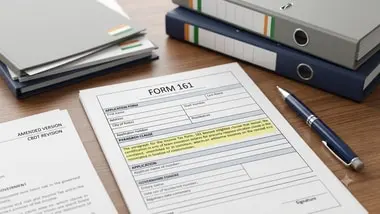
Taxpayers can now seek a waiver of penalty for income misreporting using the revised Form 161, notified by the Central Board of Direct Taxes (CBDT). The form, applicable from October 8, 2026, requires details of assessed income, under-reported income, tax payable and payments made.
The revised form explicitly allows penalty waiver requests, a provision previously unavailable for misreporting cases. It aims to help taxpayers avoid larger penalties, minimise litigation, and settle disputes earlier. The relief is subject to conditions under the Income-tax Act, 2025.
Chartered accountant Suresh Surana called the revision a welcome development, noting it provides a clearer procedure for seeking immunity from prosecution and penalty waiver. However, the waiver is not automatic, taxpayers must satisfy prescribed conditions. Form 161 is optional and filed only when a taxpayer intends to seek immunity after paying the full demand and not filing an appeal.
Indian Opinion Analysis
The revision to Form 161 closes a gap that previously barred penalty waiver requests in income misreporting cases, giving taxpayers a clearer path to settle disputes without court time. The key condition, paying the full demand and forgoing the right to appeal, forces a cost-benefit decision: immediate cash outflow in exchange for certainty and avoidance of litigation. The CBDT has set no automatic waiver, leaving the principal officer discretion on each application. The next concrete step for an eligible taxpayer is to file the revised form and await a decision from the assessing officer.
Source: economictimes.indiatimes.com
This brief was synthesised by AI from the source linked above. Methodology and corrections.