
















Now Reading: Chandigarh waterlogging after 72.4 mm rain exposes drainage flaws
-
01
Chandigarh waterlogging after 72.4 mm rain exposes drainage flaws



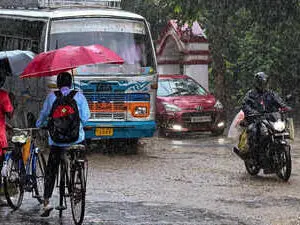
Chandigarh was severely waterlogged after 72.4 mm of rain fell in two hours on Tuesday evening, with water over three feet deep in some areas. Roads, markets and houses were flooded, and commuters were stranded for hours. The stormwater drainage system, designed in the 1950s to handle 15-20 mm per hour, was overwhelmed by the actual intensity of about 36.2 mm per hour.
A road cave-in on Madhya Marg was caused by a burst stormwater pipeline, with officials attributing it to poor audit of underground infrastructure. The Municipal Corporation blamed the UT administration for not cleaning choes, while councillors and residents said road gullies were cleaned only on paper. UT Administrator Gulab Chand Kataria directed urgent coordinated action and conducted a ground visit.
Separately, Haryana Public Health Engineering Minister Ranbir Gangwa sought location-wise reports on waterlogging across the state and warned of action against negligence. He said officials must not leave district headquarters during monsoon and must ensure adequate equipment. The reports will examine reasons for delayed drainage, and a review meeting will be held soon.
Indian Opinion Analysis
Hindustan Times’ coverage blends neutral-report framing with a critical undercurrent, leading with infrastructure failure and quoting opposition councillors blaming the administration, while also including the MC mayor’s counter-blame and the administrator’s inspection. The story gives space to both official and resident accounts but does not adopt an explicitly government-critical stance. The second source is a wire report on the Haryana minister’s directive, which is neutral-report in tone, merely relaying the government’s stated response. A careful reader should note that neither story independently verifies claims of cleaning only on paper or the adequacy of the infrastructure audit. What to watch: the outcome of Gangwa’s review and the MC’s repair timeline for the Madhya Marg cave-in.
Coverage: 2 sources, 2 neutral
Sources (2): hindustantimes.com (neutral report), hindustantimes.com (2) (neutral report)
This story was synthesised by AI from the 2 sources linked above. Methodology and corrections.
Updated: this story now draws on 2 sources.