
















Now Reading: IISER-Pune startup builds atomic clock for satellite navigation
-
01
IISER-Pune startup builds atomic clock for satellite navigation


The Story in Brief
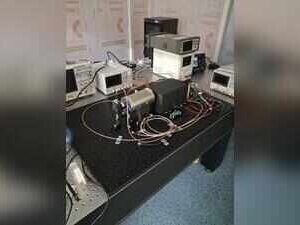
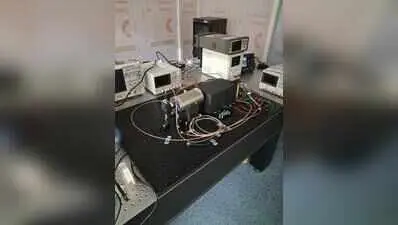
QuPrayog, a startup incubated at IISER-Pune, has developed a laboratory-scale atomic clock prototype using rubidium-87 atoms, completed in seven months. The company aims to launch a miniature version by August 2027. The clock uses Coherent Population Trapping (CPT) technology, interacting laser light with atoms for high stability.
The Times of India reports the clock could support India's new generation of Low Earth Orbit (LEO) navigation satellites and reduce dependence on imported equipment. The Hindu notes the development comes amid growing export curbs on critical dual-use technologies, highlighting the need for domestic alternatives. Both outlets say the prototype improved stability of a crystal oscillator by about 50 times over 1,000 seconds.
The startup, founded in 2024, receives support from the National Quantum Mission, approved in 2023 with an allocation of Rs 6,003.65 crore over eight years. The next phase involves improving performance and packaging before miniaturisation.
Indian Opinion Analysis
Both outlets report the same core facts from QuPrayog's announcement, producing uniform coverage. The Times of India leads with the technology's application to LEO navigation satellites and strategic independence, while The Hindu foregrounds the context of international export controls on atomic clock technology. Each outlet adds a distinct framing context without conflicting on any figure or timeline. The balanced reading is that the prototype is a technical step in India's quantum mission, with its significance framed either by strategic ambition or by global trade restrictions. The next step is the company's work towards a miniature product by end of 2027.
Coverage: 2 sources, 2 neutral
Sources (2): timesofindia.indiatimes.com (neutral report), thehindu.com (neutral report)
This brief was synthesised by AI from the 2 sources linked above, so one read covers every framing they carry. Methodology and corrections.