














Now Reading: China joins US in reusable rocket race with LandSpace success
-
01
China joins US in reusable rocket race with LandSpace success


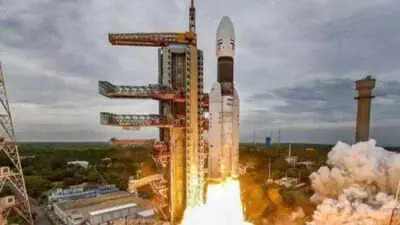
Chinese private space company LandSpace has successfully recovered the first stage of its Zhuque-3 rocket after an orbital launch, landing the booster at a designated site in Gansu on August 19. It is China's first successful land-based recovery of an orbital-class rocket by a private company, following an earlier success in July where a rocket stage was recovered using a net on a sea platform. The achievement places China alongside the US in a club dominated by SpaceX.
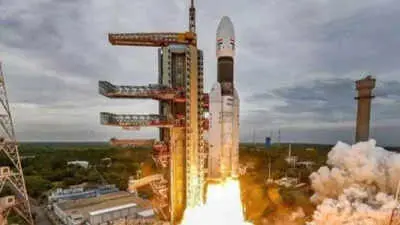
Reusable rockets change the economics of spaceflight by allowing the most expensive parts of the launch vehicle to be recovered and flown again. A Nasa analysis of SpaceX's Falcon 9 found the average cost of a flight using a new booster was around $65 million, compared with about $50 million when a previously flown booster was used. Reusability also enables more frequent launches since recovered boosters can be prepared faster than building new ones from scratch.
Indian Opinion Analysis
India's own reusable rocket programme, the Reusable Launch Vehicle-Technology Demonstrator (RLV-TD), conducted its first landing experiment in 2023. ISRO has tested a winged body that glides back to land, rather than the vertical landing approach used by SpaceX and now LandSpace. The cost of putting a kilogram into low Earth orbit using a fully reusable system could fall below $2,000, compared with the current $5,000-10,000 range for expendable rockets. ISRO's next RLV-TD landing test is expected within the next 12-18 months.
ISRO's Next RLV-TD landing test is expected within the next 12-18 months.
Source: timesofindia.indiatimes.com
This brief was synthesised by AI from the source linked above. Methodology and corrections.