


Now Reading: SC summons Delhi Police official over journalist assault allegations
-
01
SC summons Delhi Police official over journalist assault allegations


The Story in Brief
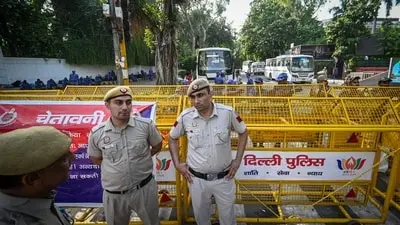
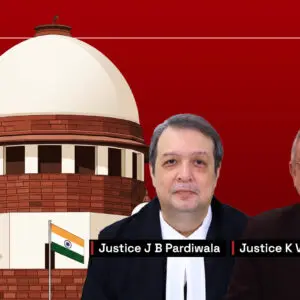
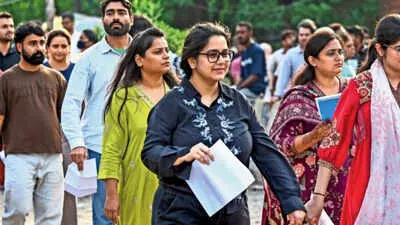
The Supreme Court on Wednesday, 14 October, summoned a senior Delhi Police official to appear on Thursday, 15 October, over allegations that journalists were assaulted and detained while covering protests against Chief Election Commissioner Gyanesh Kumar on 10 and 11 October. The court’s direction follows writ petitions from the Delhi Union of Journalists, the Network of Women in Media India and the Free Speech Collective, which claim police actions violated the court’s 10 October order protecting media personnel. Separate petitions allege women journalists were subjected to invasive searches and misbehaviour.
Separately, Delhi Police on 13 October registered an FIR against independent journalist Rosy and others under the SC/ST (Prevention of Atrocities) Act on a complaint by Assistant Commissioner of Police Vivek Bhagat, who alleges she made casteist remarks against him during a 3 October protest. Bhagat’s complaint states the journalist referred to his Megh/Meghwal caste and questioned his appointment. The journalist’s allegations of sexual harassment against Bhagat remain under investigation by the Crime Branch, with no FIR registered. Press bodies including the PCI, IWPC, DUJ and the Editors Guild of India have condemned journalist detentions, with the Guild reporting at least 38 journalists detained over the two-day protests.
Update, 15 October 2026: On 14 October, the Delhi Union of Journalists filed a writ petition in the Supreme Court alleging detention and assault of journalists on 10 and 11 October, citing a signed statement by senior journalist Paranjoy Guha Thakurta and a Committee to Protect Journalists report of at least 35 detentions. Times Now and Live Law report the petition challenges a 5 October Delhi Police advisory on accreditation. The Supreme Court summoned a senior Delhi Police official to appear on 15 October.
Indian Opinion Analysis
The coverage splits into two camps. Press bodies and the CPI MP highlight mass detentions and a PIB accreditation dispute, framing the police response as a ‘blatant attack on press freedom’. The Delhi Police’s position, that some protesters posed as journalists, appears only in Mathrubhumi’s report. Several neutral outlets, including Times Now and Live Law, focus on the Supreme Court summons and the DUJ’s petition without adopting either side’s language. The second track concerns ACP Vivek Bhagat: outlets such as The Hindu, The Print and Times of India report his counter-FIR under the SC/ST Act in detail, while his accuser’s sexual harassment complaint remains under Crime Branch inquiry. No outlet reports a resolution on either track. The Supreme Court’s hearing on 15 October is the single concrete next step across all sources.
Coverage: 27 sources, 9 government-critical, 18 neutral
Sources (27): mid-day.com (government critical), thehindu.com (government critical), nagalandpost.com (government critical), timesofindia.indiatimes.com (neutral report), mathrubhumi.com (government critical), timesnownews.com (neutral report), timesofindia.indiatimes.com (2) (neutral report), nationalheraldindia.com (government critical), deccanchronicle.com (government critical), indianexpress.com (neutral report), indiatvnews.com (neutral report), timesnownews.com (2) (neutral report), aljazeera.com (government critical), thequint.com (government critical), hindustantimes.com (neutral report), thehindu.com (2) (neutral report), theprint.in (neutral report), scroll.in (neutral report), highlandpost.com (government critical), news9live.com (neutral report), timesnownews.com (3) (neutral report), abplive.com (neutral report), mathrubhumi.com (2) (neutral report), economictimes.indiatimes.com (neutral report), timesnownews.com (4) (neutral report), livelaw.in (neutral report), timesofindia.indiatimes.com (3) (neutral report)
This brief was synthesised by AI from the 27 sources linked above, so one read covers every framing they carry. Methodology and corrections.