













Now Reading: Delhi air quality worsens to ‘poor’ hours after rain relief
-
01
Delhi air quality worsens to ‘poor’ hours after rain relief



The Story in Brief
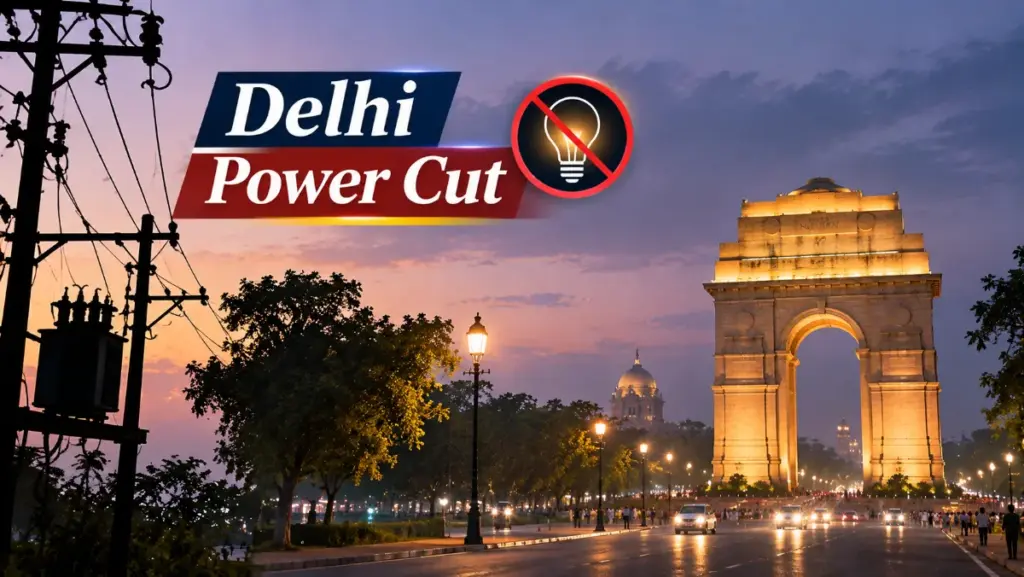
Delhi’s brief spell of clean air ended on Sunday, 15 November, with the Air Quality Index rising to 290, in the ‘poor’ category, by 4 pm, according to AQI.in. The AQI had dropped to a ‘satisfactory’ 90 at 4 pm the same day after light rainfall, following days of ‘very poor’ air since 11 November. The Central Pollution Control Board classifies AQI 201-300 as ‘poor’.

Times of India reports that while PM2.5 levels fell sharply across monitoring stations, several stations showed ‘good’ and ‘satisfactory’ readings by 6 pm despite the AQI remaining ‘poor’ or ‘very poor’ because the index uses a 24-hour average. At 10 pm the AQI was 350, improving to 332 by noon and 290 by 4 pm. Experts, including Sunil Dahiya of Envirocatalyst, called the improvement disproportionate to weather conditions, as no recorded rainfall fell and winds peaked near 15 kmph. IITM previously attributed 37% of Delhi’s pollution to biomass burning.
Indian Opinion Analysis
Times Now and Times of India both report the same core event, Delhi’s AQI falling to 90 after rain, then rising back to 290, and neither frames the story as a government failure or a public health crisis. Their coverage is uniform straight reporting, focusing on the meteorological conditions and the gap between short-term PM2.5 levels and the 24-hour AQI. Live Mint, by contrast, uses the pollution event as a launching pad for an opinion column that blames citizens’ apathy and ineffective enforcement of firecracker bans, drawing a controversial Auschwitz comparison. Its stance is left-leaning and sensationalist, while the two news-sites remain neutral. The balanced reading is that the sources agree on the factual sequence but diverge sharply on whether the story is a weather note or a moral indictment, and Live Mint’s rhetoric pushes the latter without adding new data on the specific 15 to 16 November episode.
Coverage: 3 sources, 2 neutral, 1 sensationalist
Sources (3): timesnownews.com (neutral report), timesofindia.indiatimes.com (neutral report), livemint.com (sensationalist)
This brief was synthesised by AI from the 3 sources linked above, so one read covers every framing they carry. Methodology and corrections.
Update, 16 November 2026: this story now draws on 3 sources.