












Now Reading: Delhi bans DTC bus strikes for 6 months under ESMA
-
01
Delhi bans DTC bus strikes for 6 months under ESMA


The Story in Brief
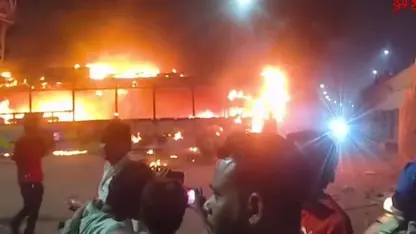
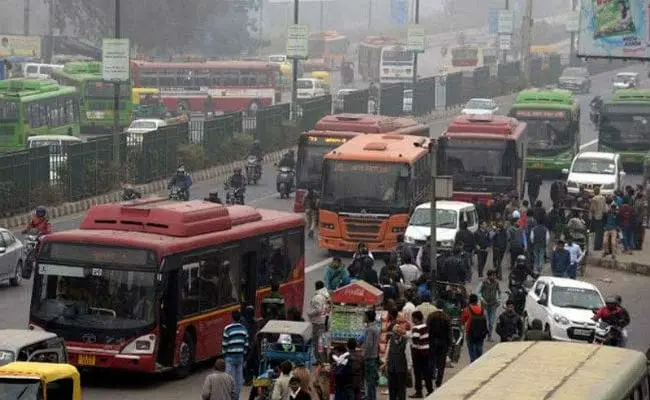
The Delhi government has invoked the Haryana Essential Services Maintenance Act (HESMA), as extended to the capital, to prohibit strikes and agitations by employees of the Delhi Transport Corporation (DTC) and the Cluster Bus Scheme for six months, effective from September 25. The move comes amid a contractual drivers' strike that began on September 15 or 16, disrupting bus services across Delhi. The notification, issued under Sections 3 and 4A of HESMA, declares the services of 'critical importance' and cites public hardship. Violation can lead to criminal consequences, including imprisonment of up to three years and a fine.
Union representatives said none of the drivers' demands, including higher wages and medical and social security benefits, have been met. Contractual drivers currently receive Rs 747 per day against a demand of Rs 2,000. Transport minister Pankaj Singh confirmed that about 500 permanent DTC drivers previously on non-driving duties have been redeployed to operate buses for private concessionaires. Meanwhile, concessionaires have terminated the services of over 500 contractual drivers from five depots, and DTC will provide its drivers as replacements until new arrangements are made. The union is now chalking out its future strategy.
Delhi runs a public bus fleet of approximately 6,600 buses, including around 4,900 electric and 1,750 CNG buses. The Delhi High Court, during a hearing on September 23, had asked the government why HESMA had not been invoked earlier.
Update, 2 October 2026: Hindustan Times reports that the law invoked is the Haryana Essential Services Maintenance Act (HESMA), as extended to Delhi, not ESMA. It adds that the Delhi High Court on September 23 had asked why HESMA had not been invoked, and that concessionaires have terminated over 500 contractual drivers from five depots, with DTC providing its own drivers as replacements. NDTV and Times of India had not reported these details.
Indian Opinion Analysis
NDTV and Times of India both report the government's invocation of ESMA and the redeployment of 500 DTC drivers, framing it as relief for commuters. Hindustan Times adds several details absent from the other two: that the law invoked is specifically HESMA as extended to Delhi, that the High Court had asked on September 23 why it had not been invoked, and that concessionaires have terminated over 500 contractual drivers. Hindustan Times also notes the potential criminal penalties under the Act, including up to three years' imprisonment, while NDTV and Times of India focus on the prohibition and the redeployment without mentioning penal consequences. The coverage is otherwise uniform straight reporting, the differing detail reflects Hindustan Times's more legal-institutional frame.
Coverage: 3 sources, 3 neutral
Sources (3): ndtv.com (neutral report), timesofindia.indiatimes.com (neutral report), hindustantimes.com (neutral report)
This brief was synthesised by AI from the 3 sources linked above, so one read covers every framing they carry. Methodology and corrections.