


















Now Reading: Digital childhood raises fears of lost resilience and real-world skills
-
01
Digital childhood raises fears of lost resilience and real-world skills

Digital childhood raises fears of lost resilience and real-world skills

A seven-year-old sits in a room full of family members, absorbed in a smartphone, scrolling through videos. This scene, increasingly common, has sparked concern about what children lose as they gain unprecedented digital access. Experts warn that every minute in a virtual world replaces real-life experiences essential for development: solving puzzles, outdoor play, riding bicycles, arguing with friends, and learning patience through boredom.
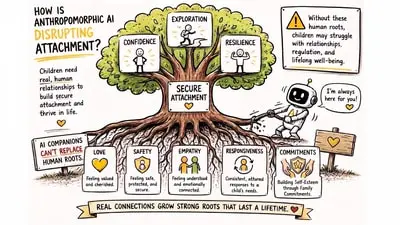
The rise of AI companions and chatbots is prompting questions about how children learn to form relationships. The frictionless, subservient nature of these tools may train children to prefer machine relationships over genuine human ones, leading to long-term social issues. Research shows many adolescents display smartphone use patterns consistent with behavioural addiction, with teenagers spending roughly 35 hours per week on smartphones, linked to social difficulties, loneliness, and attention problems.
The consequences of an overwhelmingly digital childhood are not always visible immediately but include reduced ability to tolerate frustration, shortened attention spans, weaker interpersonal relationships, and declining academic performance. Experts emphasise that childhood is meant to include scraped knees, missed goals, and hard-earned friendships. The question is whether children will remain connected to the real world that teaches them to thrive.
Indian Opinion Analysis
The core worry here is displacement: screen time crowds out unstructured play and face-to-face interaction, which psychologists have long identified as critical for developing executive function and social competence. India's National Education Policy 2020 already flagged the need for play-based learning. What is at stake is not just academic scores but a generation's capacity for patience, negotiation, and empathy. The government is yet to issue binding screen-time guidelines for children, though the WHO recommends no more than one hour per day for ages 2-4. A clear next signal would be any regulatory move by the ministry of women and child development or the education ministry on digital pedagogy limits.
Source: hindustantimes.com
This story was synthesised by AI from the source linked above. Methodology and corrections.