





















Now Reading: EPFO simplifies PF withdrawal rules, allows 75% advance
-
01
EPFO simplifies PF withdrawal rules, allows 75% advance



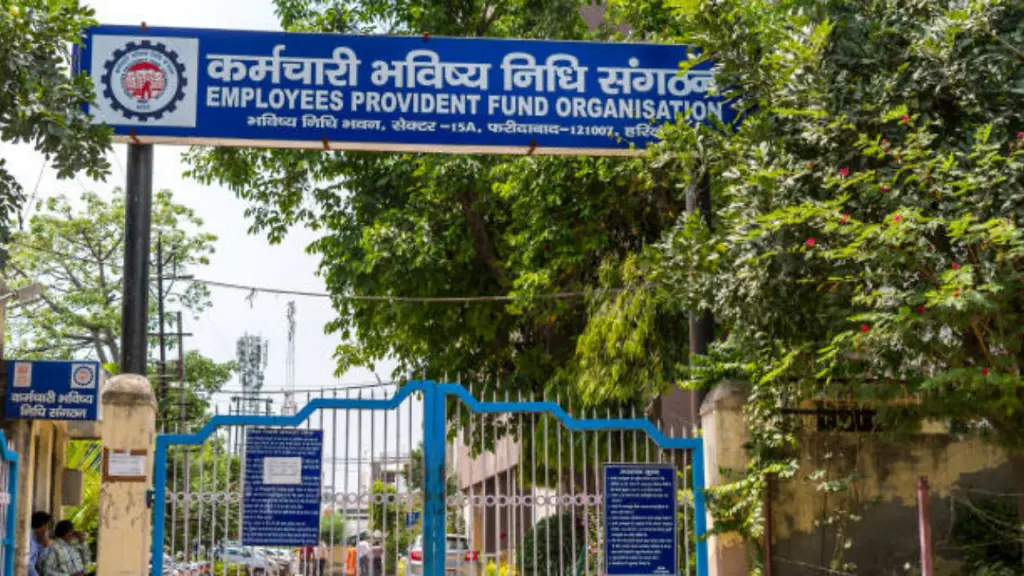
The Employees' Provident Fund Organisation (EPFO) has introduced a simplified framework for partial withdrawals, allowing members to access up to 75 per cent of their provident fund balance for emergencies, health, education,…
The Employees' Provident Fund Organisation (EPFO) has introduced a simplified framework for partial withdrawals, allowing members to access up to 75 per cent of their provident fund balance for emergencies, health, education, and housing. The remaining 25 per cent stays invested. A minimum membership of 12 months is now standardised for most advances, replacing earlier varying rules across 13 categories. The new system groups withdrawals into three broad classifications: essential needs, housing needs, and special circumstances where no reason is needed. For unemployment, members can access 75 per cent immediately after job loss, with the rest available after 12 months of continuous unemployment. The EPF interest rate for 2025-26 remains at 8.25 per cent.

Livemint reports separately that EPFO rules allow separate PF accounts for each employer when a person holds multiple jobs simultaneously. Employees eligible for PF must ensure compliance with employment contracts, as dual employment may breach non-compete clauses or confidentiality agreements. The Factories Act prohibits dual employment, though IT companies in some states are exempt. EPFO advises employees to first approach their company with PF grievances, and then the regional provident fund commissioner if unresolved. The rules aim to manage overlapping employment periods in service records without compulsion for single membership.
Indian Opinion Analysis
Livemint focuses on EPF rules for multiple jobs, including compliance and moonlighting concerns, essentially guiding employees through overlapping membership. Times Now covers EPF withdrawal rules under a new simplified framework, emphasising easier access to 75% of PF balance. Livemint's stance is neutral-report, detailing procedures without advocacy. Times Now's coverage is mildly pro-government, framing the rules as member-friendly and streamlined, with language like "simplified framework" and "easier for members". Both sources address distinct aspects of EPFO rules: Livemint on contributions, Times Now on withdrawals. A careful reader should note that Livemint's multiple-job information is precautionary, while Times Now's withdrawal rules are presented as a finalised benefit. The measured takeaway is that EPFO has made both contributions and withdrawals more flexible, but legal risks around dual employment remain. Watch for employer responses to dual-employment claims under the new framework.
Coverage: 2 sources, 1 pro-government, 1 neutral
Sources (2): livemint.com (neutral report), timesnownews.com (pro government)
This story was synthesised by AI from the 2 sources linked above.
Updated: this story now draws on 2 sources.